by

Introducing...
Gardens don’t come together all at once.
They’re shaped by time, observation, experimentation, and a series of good decisions — not by impulse buys or one-size-fits-all plans.
The Garden Design Lab was created to teach you how to make those decisions with confidence.
Inside the Lab, you’ll learn the same design frameworks and planning process I’ve used for decades as a professional garden designer — from reading a site and organizing space, to developing planting plans that work together and hold up over time.
This is not a makeover show or a trend-based course.
It’s a place to slow down, think clearly, and design with intention.
A self-guided design studio for creating thoughtful, well-planned gardens.

Learn More

Does this sound Familiar?
Over many years of professional practice, I’ve seen the same garden design challenges surface again and again.
The Garden Design Lab was built to address those patterns — offering a clear process for making better decisions from the start.
The most common garden design mistakes are surprisingly consistent.

Genus loci means the spirit of a place. Simply put, it’s storytelling.
The best gardens are shaped by a clear narrative that blends culture, environment, architecture, and the people who live there. That story gives decisions context and hierarchy.
Without a story, design choices become arbitrary. With one, a garden holds together — and continues to make sense as it changes.
This way of thinking extends well beyond gardens.
‘Genus Loci’ — or, Why Place Matters
It usually starts with good intentions. A patio here. A birdbath there. A path added later, drawn as the shortest line between two points because it seems efficient at the time.
Individually, none of these decisions are wrong. The problem is that they’re made in isolation. Without a plan, they accumulate into a garden that feels awkward, fragmented, and harder to use than it should be.
Good garden design isn’t about dropping elements into space. It’s about understanding how those elements relate — to each other, to the house, and to how the garden is meant to be lived in.
Most “plop and drop” gardens aren’t disasters — they just never quite settle.
Knowing more plants doesn’t lead to better design. More knowledge can create noise.
It isn’t about how much you know. It’s as much about what you choose to leave out, as how elements relate. A smaller, well-considered palette almost always works better than an encyclopedic one.
Design improves with clarity, not accumulation.
The "PloP & Drop" Approach
Assuming More Knowledge = Better Design
Many gardens become complicated in the pursuit of being interesting. More elements, more ideas, more variety — all added with the hope that richness will emerge.
Strong garden design works differently. It’s built from clear, simple layers: spatial structure, material choices, and planting. When those layers are thoughtfully composed, depth and interest follow naturally.
What makes a garden feel distinctive isn’t how many ideas it contains, but how well its layers work together.
Mistaking Complexity for Interest
Where all garden makers go wrong...
Successful gardening isn’t a personality trait. It’s a set of skills.
Plant care, creative decision-making, and design improve through observation, repetition, and experience. When something fails, it’s rarely because you “don’t have a green thumb.” It’s usually because the conditions, timing, or decisions didn’t line up.
When gardeners understand how a space works and how plants respond, results improve — not all at once, but steadily and predictably.
Blaming Results on a “Lack of a Green Thumb”
It feels intuitive to begin with plants. They’re tangible, emotional, and full of promise. But in a professional design process, plants come later.
Garden design follows a sequence. Before plant selection, there are questions of space, structure, circulation, and use. When those earlier steps are skipped, even good plants struggle to succeed.
Plants are expressive, but they’re not mind readers.
Choosing plants without understanding the framework they need to support often leads to frustration — not because the plants are wrong, but because the context hasn’t been established.
Starting with Plants Instead of Space
01

02
03
04
05

Imagine, a garden That...
How does this sound?
Improves with time, growing more cohesive and rewarding rather than wearing out or going out of style.
Is quietly admired, producing real things you value — flowers, food, or simply a beautiful view.
Supports everyday life, offering a healthy, welcoming place to spend time outdoors with the people you care about.
Is manageable, because it’s built from a clear vision and a practical, step-by-step plan.
Feels calming the moment you arrive — a place that reliably brings you down a notch at the end of the day.
Begin the Process
The
Garden
Design
LAb

it's all possible inside...
New Homeowners
Experienced Gardeners
Aspiring Garden Designers



Who is this Program For?
You have a new house or garden and need a clear place to start.
You’d consider hiring a designer, but want a thoughtful, more affordable DIY path — without sacrificing quality.
You’ve been gardening for years, love plants, and are ready for a more cohesive, intentional design.
You’ve worked with landscape help before and want to understand how to refine, evaluate, or course-correct the results.
You have plenty of ideas, but need help deciding what comes first — and how to make everything work together.
This is for you if:

View the Course
Basically...
You want a practical, repeatable approach to planning and building a garden you can manage over time.
You’re looking for instant results. Garden making isn’t fast, and this course is designed to unfold over time.
You’re not interested in a self-directed process that takes a few months to work through and rewards revisiting lessons as your garden evolves.
You want someone else to do the thinking or decision-making for you.
You already have a garden you truly love and don’t need to change or refine it.
If that’s you, keep enjoying it — and feel free to tag @pithandvigor so I can admire it from afar!
You’re unwilling to engage with digital tools or stretch your thinking. This course asks you to observe, reflect, and make design choices — not just follow recipes.
This is NOT for you if:

View the Course
On the flip-side...
X
X
X
X
X

"
We now have a scale plan of our home and lot. While I don't have a firm design for the areas I want to landscape I have a start of a plan about how to attractively redesign our front and rear yards. I have been a member of the local Master Gardener group for about 10 years but content about landscape design is not covered. I also feel that I will view garden photos and gardens I visit with a more discerning eye understanding a bit more about style, theme, why the garden works.

Who doesn't love a good makeover?
- Sharon in NatcheZ, MS

SUCCESS
STORIES
“
"
My favorite part of the class was seeing my plan evolve from crude shapes to an actual detailed plan. I also really enjoyed the style-finder section. I found it very helpful to get a grasp on what my style actually is, and to put it in both words and pictures. In other words, I learned a lot about myself in the process as well as about garden design.
- Janet D. in Mequon, WI
“
"
This was an awesome class! I enrolled in your first design boot camp and I find myself using your practices as I tackle yet another area in my garden. If you're thinking about it, take Rochelle's course. She's thorough, easy to follow, and is truly very inspirational.
The course flowed from one structured idea to the next in order to end up with an end product. It included things I wouldn't have done or even thought about doing on my own to come up with a realistic and yet thoughtful plan.
- Georgene B. in Hollister, CA
- George C. in Northern CA
“
“
“

Even though I've been gardening for a long time, I learned how to look and think about my garden differently. From garden styles, to creating the story, drawing up a plan and creating plant lists. All things that I have never really done before. And I'm definitely getting my soil tested this year!!
- Ginger D. in Toronto, Canada
“
"

For more than 25 years, I’ve worked as a professional garden and landscape designer, designing and building landscapes for private homes as well as hotels, spas, restaurants, and other commercial settings in the U.S. and internationally. Working across climates, cultures, and scales has shaped how I think about gardens — not as isolated projects, but as designed systems that sit at the intersection of ecology, culture, craft, and human use.
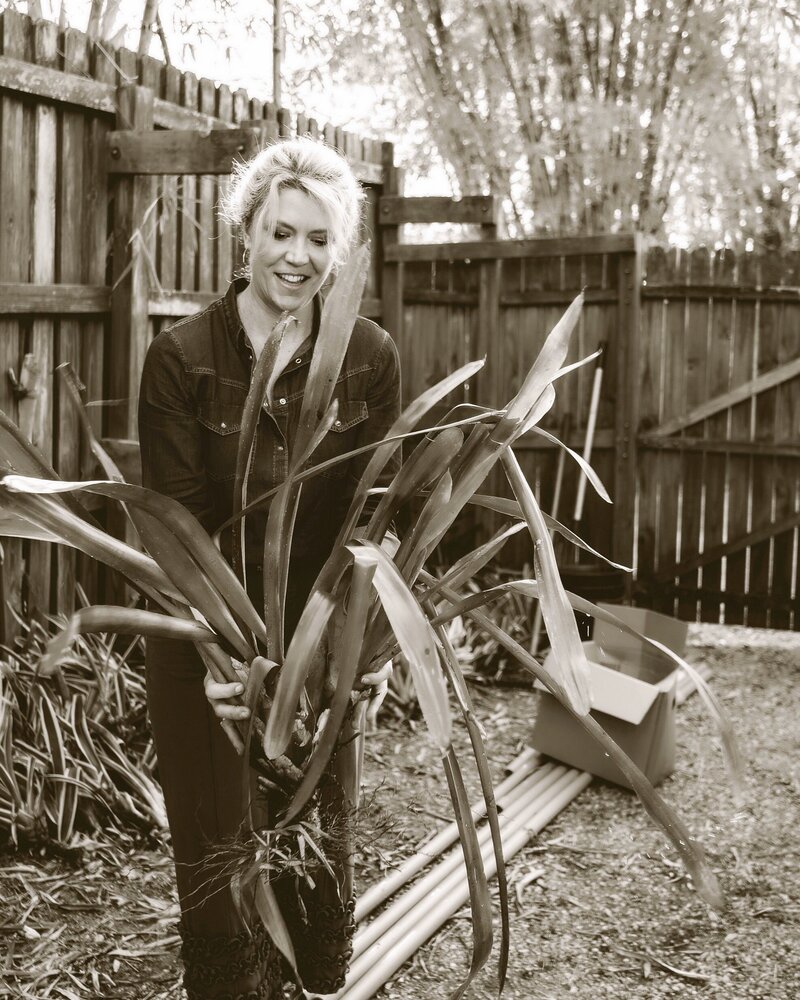
I currently serve as editor of American Gardener magazine for the American Horticultural Society, where I help guide national conversations about plants, design, and horticultural literacy.
I’ve also spent nearly six years as an on-air garden expert with HSN, teaching millions of viewers how to choose and use plants successfully in their own gardens.
Earlier in my career, I trained as a scientist before making a deliberate shift into garden design. That background continues to shape how I work — approaching gardens not as decoration, but as systems informed by ecology, history, culture, and human behavior. Over years of practice, I developed a repeatable design approach that blends observation, creativity, and practical decision-making to help people work more thoughtfully with the places they inhabit.
Like many gardeners, my first garden was a mess. I loved plants, but I didn’t yet understand design — how space, narrative, and restraint turn enthusiasm into coherence. A move to England and a formative visit to the Chelsea Flower Show fundamentally changed how I saw gardens and set me on a new professional path.
I don’t believe there’s a single “right” style of garden. I believe good gardens emerge when people learn how to read their land, make intentional choices, and stay curious over time. I created this course to share that way of thinking — so more people can design with confidence and build gardens that grow stronger as they mature.
Over time, my work expanded beyond design and construction into education, publishing, and media.
My favorite part of the class was Garden Storytelling/ What is your Garden Style because your garden should be a place for YOU! I liked seeing other designers plant plans in the How to Draw Shrubs and Trees section and Creating your Planting Plan was exciting because it was the culmination of everything.
- Sally R. In Brighton, England
“
"
#1 -Foundations
You will:
- Set up simple design tools to organize notes, ideas, reference images, and plans — creating a clear working system you can return to over time.
- Learn flexible methods for documenting your site and ideas, using either hand-drawn techniques or digital tools, depending on your preference.
Course Modules
breakdown:
#2 - Landscape Inventory
You will:
- Learn how to read your landscape to understand what will work, what won’t, and why.
- Apply the Fresh Eyes Technique to overcome familiarity blindness and see your garden the way a designer does — revealing constraints as well as opportunities.
- Identify the environmental conditions that shape long-term garden health, including light, soil, moisture, and exposure.
- Develop a working understanding of your land so future decisions are grounded, intentional, and realistic.
#3 - Simple Surveys & The Base Map
In this module, you’ll learn how to measure, document, and translate your existing landscape into a clear base map you can actually design from.
You will:
- Learn how to create a plan that works in the real world — not just on paper
- Choose between hand-drawn or digital methods to produce an accurate base map you’ll use throughout the course
- Locate and record property lines, buildings, hardscape, trees, slopes, and other fixed features
- Use clear, professional symbols so your plans are easy to read, refine, and share
- Access optional templates and trace files to speed the process and produce clean, legible drawings — no drawing talent required
#4 - The Style Story Framework
In this module, you’ll clarify what your garden is about — visually, culturally, and emotionally — so every future decision has context and coherence.
You will:
- Identify and articulate your personal design sensibility
- Translate instinct and inspiration into a clear style reference you can return to over time
- Learn the core design principles professionals rely on — and how to apply them without imitation
- Use storytelling to give your garden meaning, continuity, and direction
- Study historic and global garden styles as sources of insight, not templates to copy
- Learn how to visually and conceptually connect your house and garden
- Work with optional templates and guides that help you document your style clearly and efficiently
#5 - Generating Ideas, Testing Them & Making A Master Plan
Using the G.P.S. Planmaker, you’ll explore multiple ways your garden could work — then evaluate those options until one clear, buildable plan emerges.
You will:
- Generate and test a wide range of layout ideas without committing too early
- Learn why some layouts succeed and others quietly fail
- Use professional design strategies to resolve problem areas and emphasize your home’s strengths
- Create movement, balance, and visual rhythm across the whole site
- Weigh ideas against real constraints — space, use, and budget
- Produce a clear, right-sized master plan you can build in phases over time
#6 - Refining the Design: Materials, Details & Character
With Punch-up PRO, you’ll refine your master plan by making clear, confident decisions about materials, color, detail, and emphasis — the moves that turn a solid plan into a memorable garden.
You will:
- Learn how to combine materials and colors so they reinforce the overall design
- Identify and shape focal points that actually work in real space
- Add details that support the story of the garden rather than distract from it
- Select and place landscape art with intention and restraint
- Understand the seven design principles that quietly improve every garden
#7 - Plant Basics
In this module, you’ll build practical plant knowledge that helps you make smarter choices, diagnose problems early, and design plantings that last.
You will:
- Learn how to read plants and recognize what they need — often without knowing their name
- Understand why plants struggle or fail, and how to correct issues before they escalate
- Build a working knowledge of soil — the hidden half of the garden — and how it shapes success
- Use Botanical Latin as a tool, not a hurdle, to understand plant relationships and requirements
- Develop the ability to assess your land and match plants to conditions with confidence
#8 - Putting Plants Together
Using the Garden Design Lab’s Plant Casting approach, you’ll learn how to evaluate, combine, and refine plants so they work together visually, ecologically, and over time.
You will:
- Learn how to assess existing plantings and correct what’s not working
- Resolve overly busy or disconnected beds and bring them into focus
- Understand different planting approaches and how to apply them intentionally
- Clarify your own planting sensibility and repeat it across the garden
- Build combinations that look good, function well, and remain manageable as they mature
#9 -More Plants!
This module is about expanding your plant knowledge efficiently — without overwhelm — and building a usable, personal plant palette you can return to again and again.
You will:
- Learn fast, reliable ways to discover plants you don’t yet know — and the ones you actually need
- Use PDQ Plants to build confidence quickly and organize new plant knowledge
- Create a simple system for tracking plants and maintenance over time
- Jump-start planting plans with curated style guides and combinations
- Work with a growing library of proven five-plant groupings that translate across regions
- Install plants in ways that support long-term health and design intent
#10 - Building Your Garden
This module helps you make smart, realistic decisions about how to build your garden — whether you’re doing the work yourself, hiring help, or managing a mix of both.
You will:
- Decide when to DIY and when to bring in a contractor — and how to manage each effectively
- Learn practical strategies for controlling costs without cutting corners
- Navigate nurseries and suppliers with confidence and purpose
- Translate plans into on-the-ground execution that matches your design intent
- Access my Little Green Books — a curated resource for sourcing plants, materials, furniture, art, and finishes
- Explore book lists and references to continue deepening your skills
The
Garden
Design
LAb
it's all possible inside...
The Landscape Inventory
The style Story


There's More, You Also Get...





PuNch-up Pro
The Green Thumb Guide
PDQ Plants + Planning Tools
Simple Surveys
The Plant Casting Method
The G.P.S. Planmaker + Drawing Guides
A guided process for reading your site before you design it.
Checklists and prompts help you assess use, constraints, exposure, risk, and environmental conditions — so decisions are grounded in reality, not guesswork.
(Previously valued at $600)
A practical guide to measuring and mapping your space accurately — without overcomplication.
(Previously valued at $700)
A structured way to clarify what you want your garden to say — and why.
Worksheets and visual templates help you translate taste, place, and personal history into a clear design direction that guides every decision.
(Previously valued at $800)
Tools for generating, testing, and refining layout ideas — then translating them into a clear, buildable plan. Includes step-by-step guidance and drawing aids. Ready-to-use templates that help you create clean, legible plans without advanced drafting skills.
(Previously valued at $800)
Design guidance for refining materials, color, focal points, and details — the layer that elevates a plan from functional to memorable.
(Previously valued at $800)
Navigating The Nursery + THe Plant-up Guide
A plain-spoken foundation in plant health, soils, and site conditions — focused on understanding why plants succeed or fail.
(Previously valued at $400)
A clear approach to assembling planting schemes that look good, grow well, and hold together over time.
(Previously valued at $800)
Practical guidance for sourcing plants, shopping with intention, and installing them so your design translates successfully into the ground.
(Previously valued at $200)
Includes:
- Quick-reference plant learning guides
- Size and spacing guides
- The Gardenmakers Questionnaire
- Worksheets designed to simplify planning and decision-making

"Ha ha - without this course I would be stalled for sure! To say I am inspired is an understatement!"
- Sandy in Australia
The
Garden
Design
LAb
I'm looking forward to meeting you inside!
Frequently Asked Questions
I live in _____ which is different, and unique, and NOT New England - will you be able to help me with the specifics of my region?
Short Answer - Yes.
Long Answer: Like most artistic endeavors, garden design is based on two things – Method and Materials.
Method is knowing how to design. How to approach a layout. How to put things together (visually and functionally). And how to determine and achieve the look and style that you are hoping to create.
Method is universal.
Materials, in this case, is the products, plants and tools that are available to you locally. Sure, these are different from region to region and they help to define your vernacular. But we will talk about finding and defining your style and working within your locality so that you can confidently use what is available to you to create something that fits within your regional landscape.
You need a systems and strategies for approaching the planning of your garden and I'll teach you mine and how to design your space like a pro.
While there is no requirement for you to download any special software, it is recommended that you use a couple FREE apps to help make your homework and designs easier. (details and tutorials are included in the course).
The Garden Design Lab is a web-based program, so all you need to access the course content is an internet connection. You can use your computer, smartphone, tablet or other mobile device.
There are currently more than 50 videos, which totals approximately 18 hours of content. The course instruction is delivered via video and those videos cover every aspect of garden design. Additionally, there is an extensive and growing library of downloadable worksheets, trace files, style guides and resource guides.
New lessons are occasionally added the The Garden Design Lab and your lifetime access to the course material ensures that you will receive all future additions and upgrades to the course.
No. Experienced gardeners, nursery staff and landscape professionals have all greatly benefited from the course.
The Garden Design Lab is first and foremost a design course (not a gardening course). Garden design is typically not included in Master Gardener or professional horticultural education and this course is the compliment that education. Many experienced garden makers and growers find that design education is the missing link that they need to create beautiful gardens with their plants.
Yes! In order to gift the course, make sure that you click though the gift link (rather than the main registration).
When a gift version of the course is purchased, what you are really doing is purchasing a 100% off coupon to give to your recipient.
Immediately after you purchase the gift, you will receive an email with a unique code. This code is what you need for the recipient to be able to log in and purchase the course (for free with their 100% off coupon) and create their student account with their own contact details, username and password.
Try The Garden Design Lab for 7 days.
Get your money back if it didn’t serve you.
(no questions asked)
money back
guarantee
100%
600+
18
32