


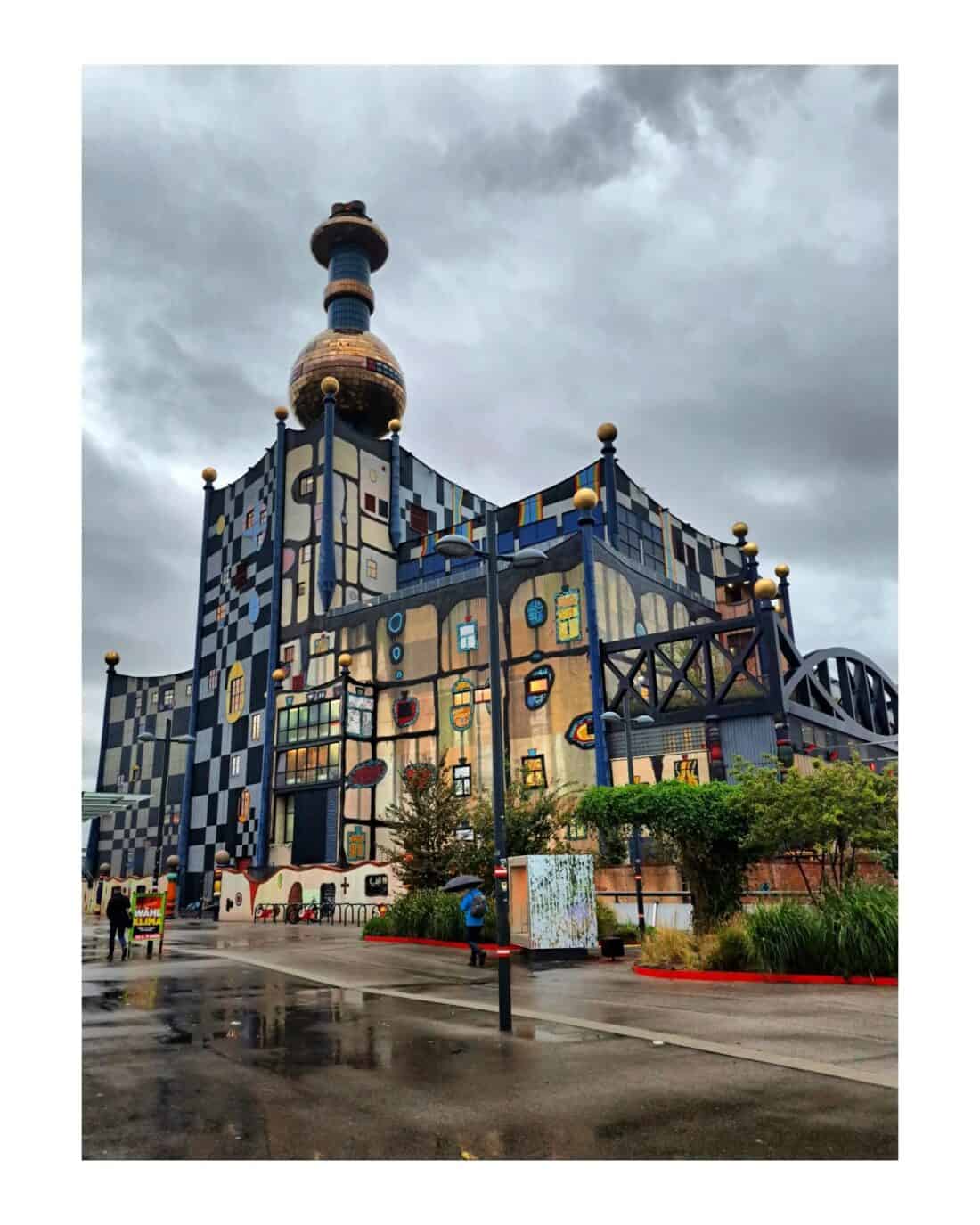
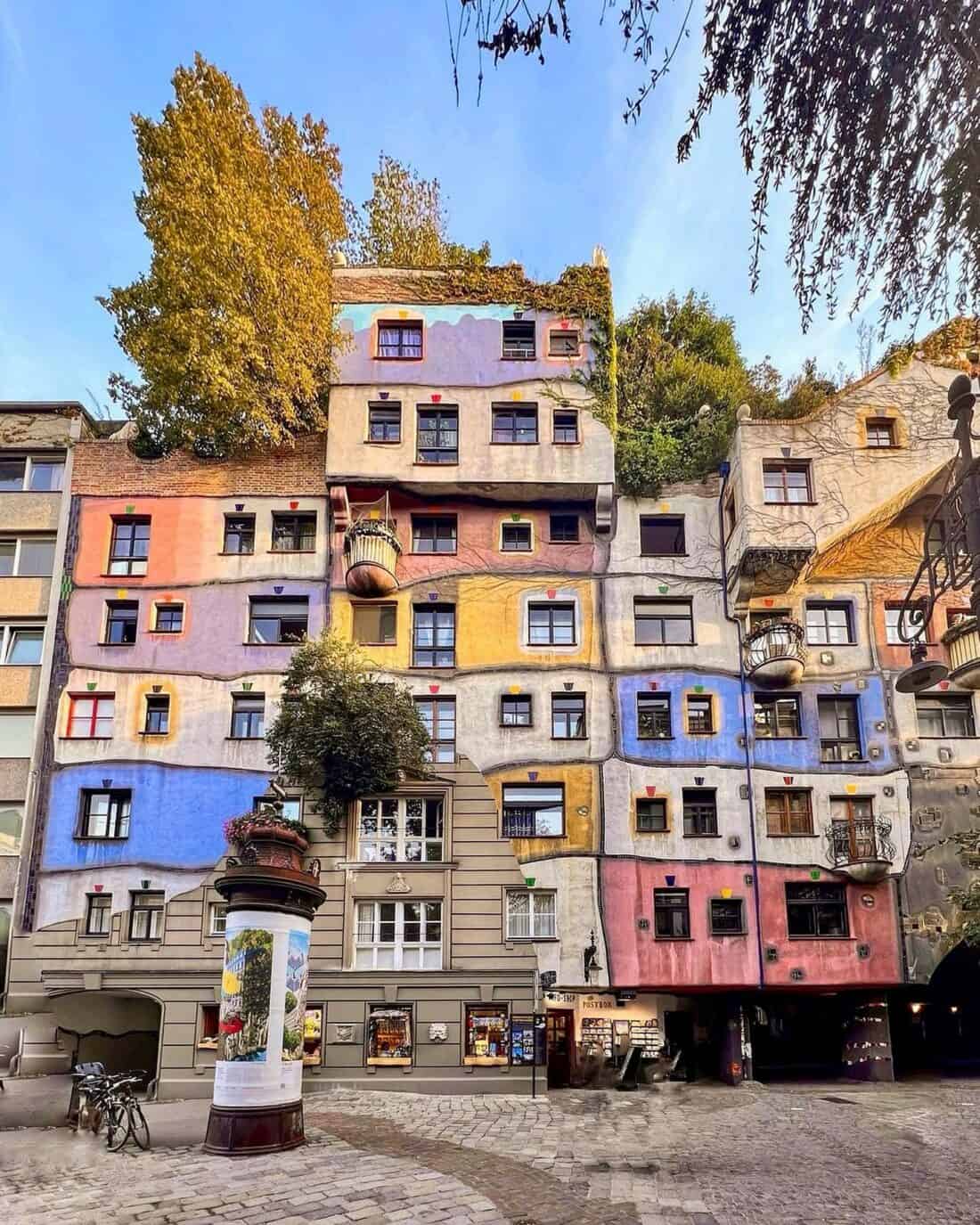
Scrolling through Pinterest the other day, I came across an image that stopped me cold: the Hundertwasser House in Vienna. It was colorful, irregular, organic—unmistakably different from the surrounding city. I went looking for more, and quickly fell down the rabbit hole of the life and work of Friedensreich Hundertwasser.
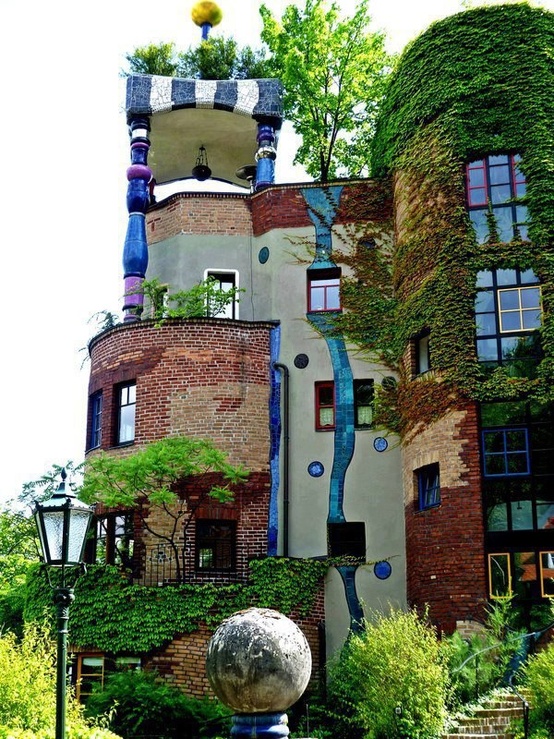
Born Friedrich Stowasser in 1928, Hundertwasser lived a life as unconventional as his buildings. He and his Jewish mother survived World War II by posing as Christians—an experience that historians suggest shaped his lifelong rejection of rigidity, conformity, and imposed order. The regimented geometry of Nazi battalions, the logic of sameness and control, appears again and again in his writing as something to be resisted.
Hundertwasser was openly hostile to sterile, monotonous urban environments. He believed architecture should serve both people and the planet, and that individuality was not a decorative choice but a moral one.
A Radical Design Philosophy
What makes Hundertwasser’s work compelling isn’t just its visual exuberance. His ideas were deeply social and environmental. He opposed straight lines, flat facades, and uniformity—not as stylistic preferences, but as symbols of systems that erase difference and disconnect people from nature.
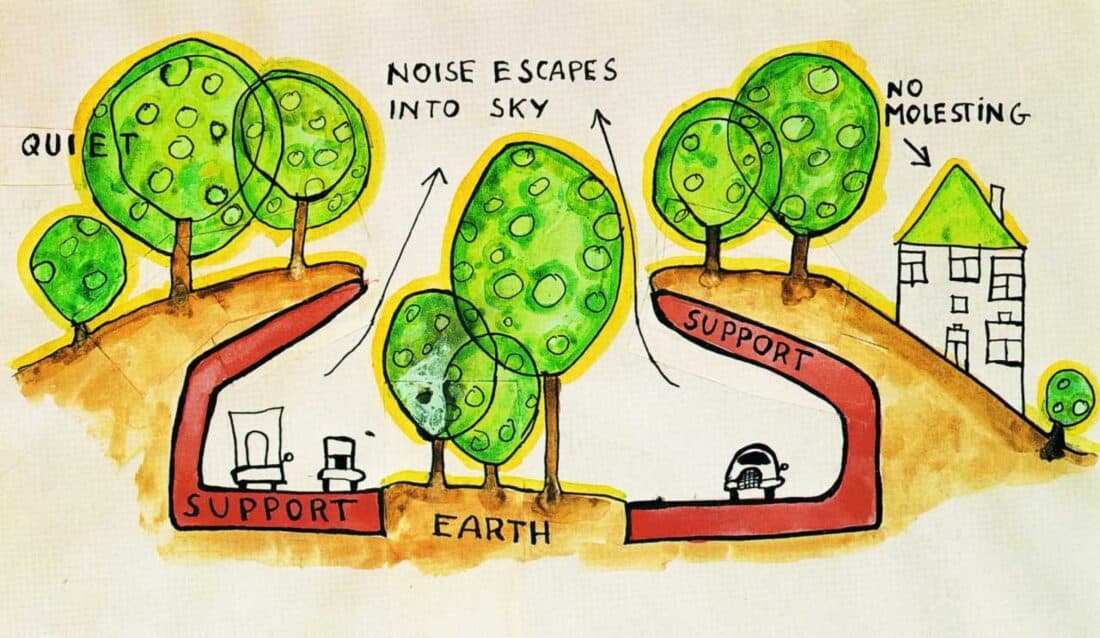
Many of his proposals feel strikingly contemporary. He imagined underground highways to reduce noise pollution and reclaim surface land for trees and people. He advocated for buildings that absorbed vegetation rather than excluding it. Long before green roofs and living walls became mainstream, Hundertwasser was arguing that architecture should literally make room for nature.
Environmental Activism and the Mould Manifesto
Hundertwasser’s environmental thinking was unapologetically political. In his Mould Manifesto, he outlined two ideas that remain provocative.
The Window Right argued that people living in rented apartments should be allowed to alter the exterior within arm’s reach of their windows—to paint, mark, and personalize their space. It was a rejection of enforced sameness and a claim for visible individuality in public life.
“So that it will be visible from afar to everyone in the street that someone lives there who is different from the imprisoned, enslaved, standardised man who lives next door.”
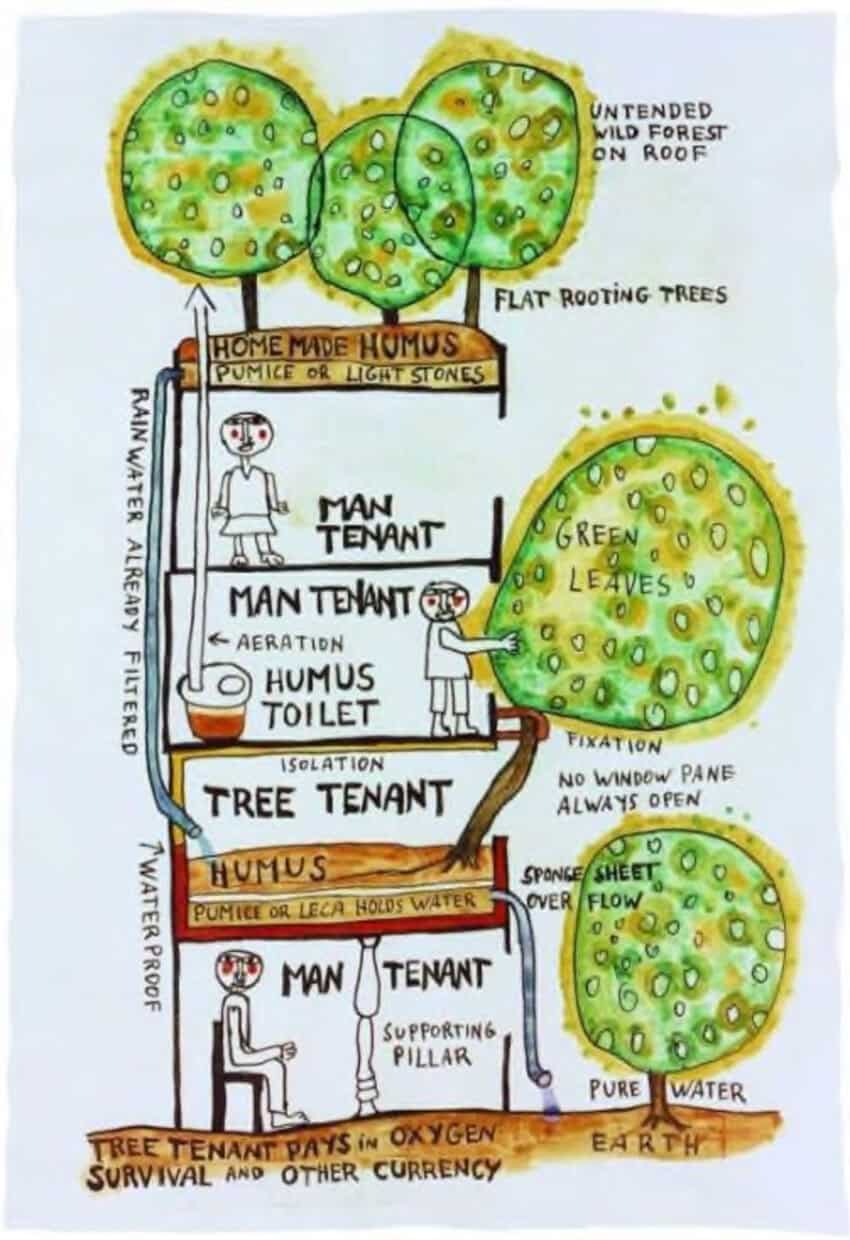
The Tree Duty proposed that trees should be integral to buildings, not ornamental afterthoughts. Hundertwasser believed urban environments had an obligation to give space back to nature, insisting that if humans walk in nature’s midst, they must behave as guests rather than conquerors.
As someone who has never had much patience for rigid HOA rules, I find this stance both inspiring and quietly radical.
Are We Actually Making Progress?
Hundertwasser’s work raises an uncomfortable question. Are today’s sustainable design trends genuinely new, or are we slowly circling ideas that were already articulated decades ago?
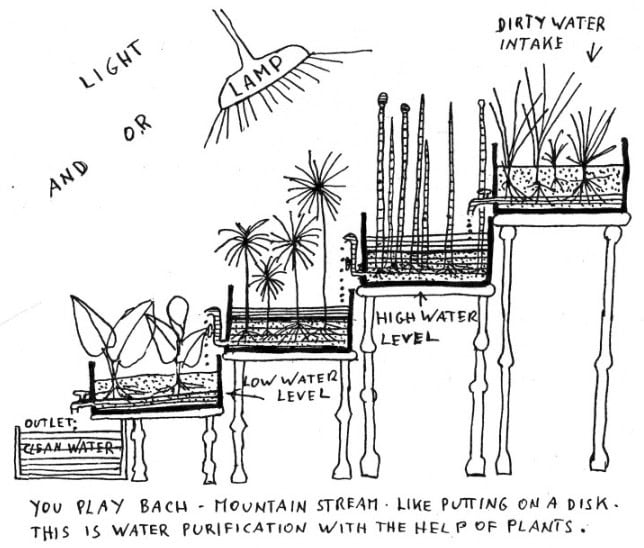
Green roofs, vertical gardens, and eco-conscious architecture are often framed as breakthroughs. And yet Hundertwasser was planting trees on buildings more than fifty years ago. That realization is both hopeful and sobering. It suggests that the problem has never been imagination—but willingness.
Why Hundertwasser Still Matters
Hundertwasser’s work endures because it treats architecture as an expression of values, not just function or style. His buildings argue for individuality, ecological responsibility, and emotional richness in the places we inhabit.
They also remind us that progress is not linear. Ideas can exist long before systems are ready to accept them.
Hundertwasser’s challenge still stands: to design environments that acknowledge human difference, invite nature back in, and resist the quiet tyranny of uniformity.
Resources and Credits
- Images: wikipedia, Tinas blog, and exchange connect.
- Hundertwasser
amazing…. thank you for sharing Rochelle..:)