


Tiny, Tough, and Worth It
I used to be all-in on tulips.
Every fall, I’d pick colors and shapes to fulfill my spring Keukenhof dreams. From early April through early May, I’d anxiously await the arrival of those big, colorful cups on stems. The drama. The early-spring thrill. The feeling that winter had finally been shown the door.
And then, inevitably, the disappointment.
Dozens of big, Dutch-style bulbs planted with care, only to vanish. Sometimes to squirrels—or whatever creature seems to follow me around and, like a cartoon villain, digs them up as fast as I plant them. Other times they simply…never show up again. The heartbreak of high maintenance, performed annually.
Somewhere along the way, I fell out of love with spectacle.
For a few years, I stopped planting standard hybrid tulips altogether. This past spring was the first time I noticed their complete absence. No towering stems. No bold cups shouting that spring had arrived.
But I did have something else.
Last fall, I tried a new (to me) kind of tulip: species tulips. These are the wild ancestors of the flashy hybrids we all know so well—smaller, earlier, and, according to reputation, tougher. More likely to return. Less appealing to critters. Less demanding of attention.
I didn’t go all in. I planted a few. Enough to see what would happen.
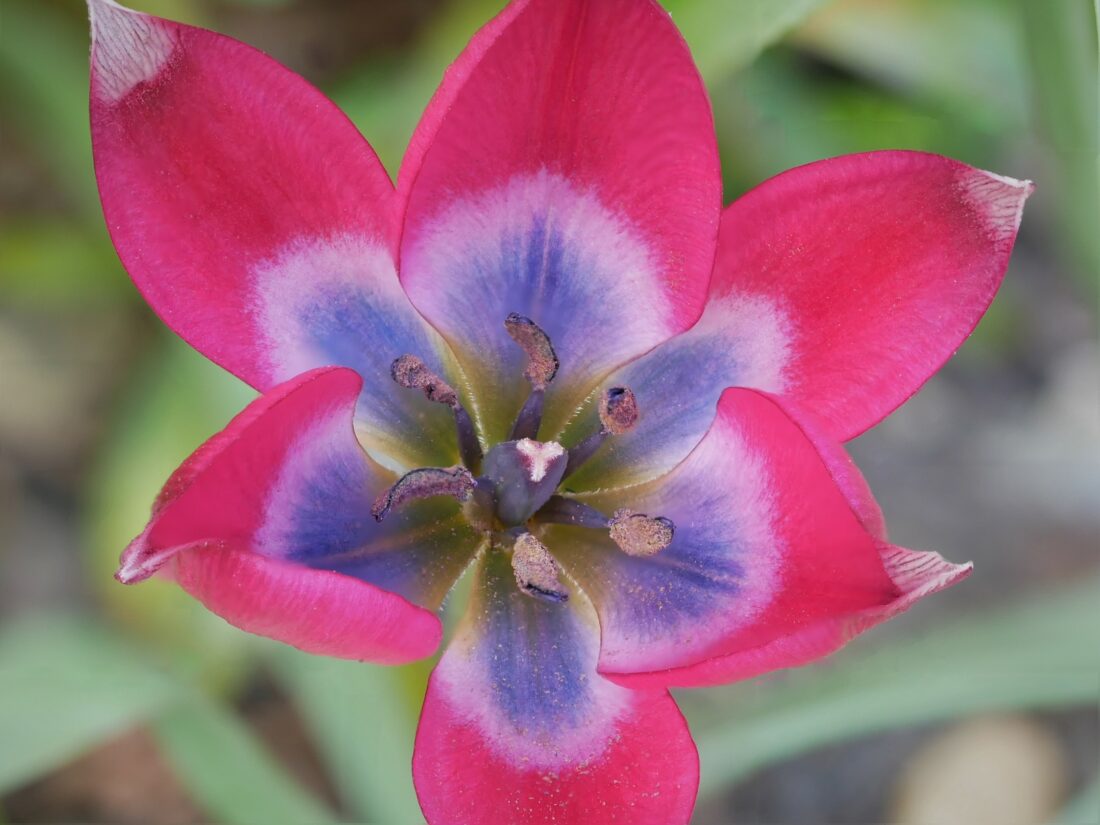
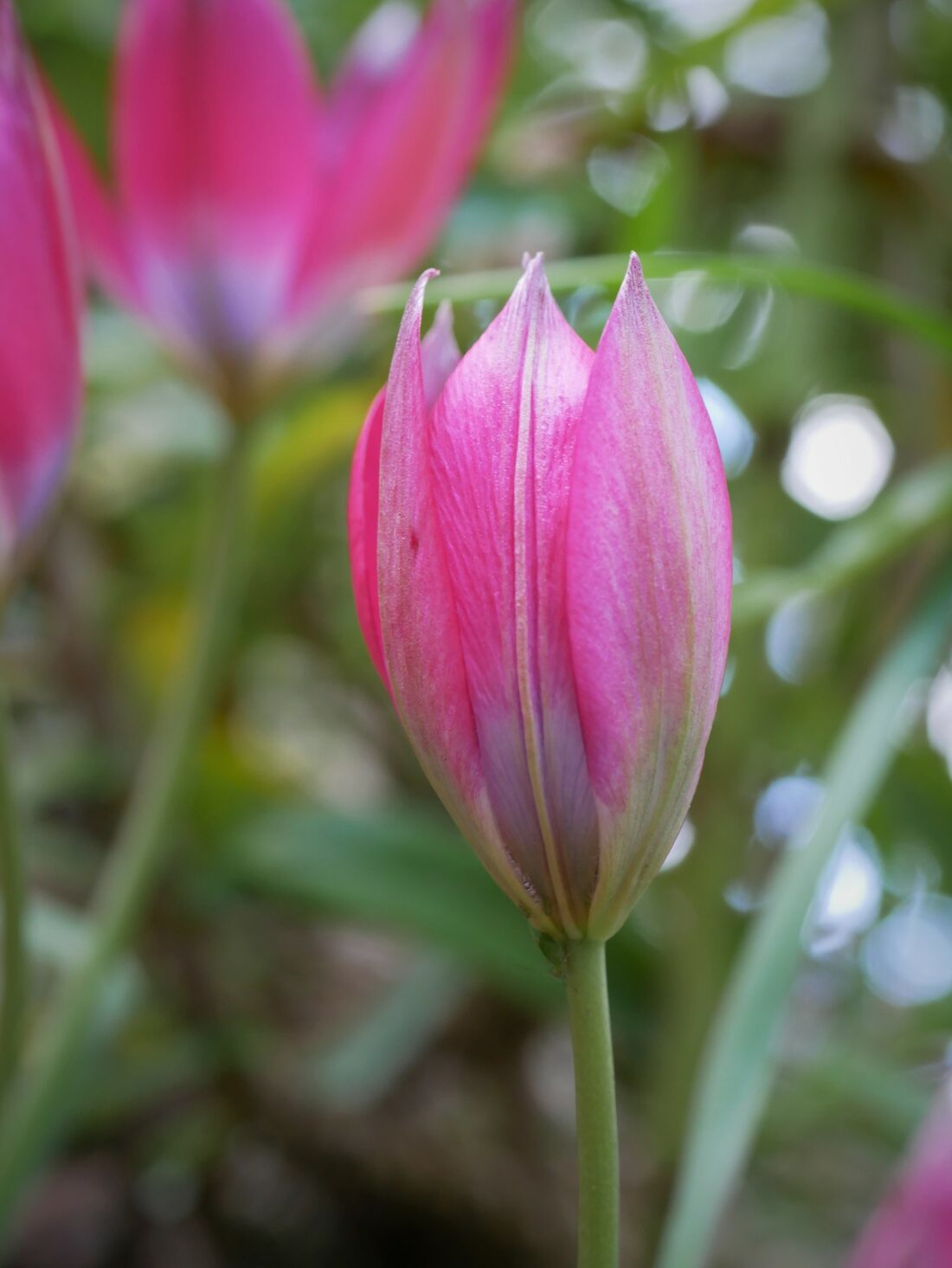
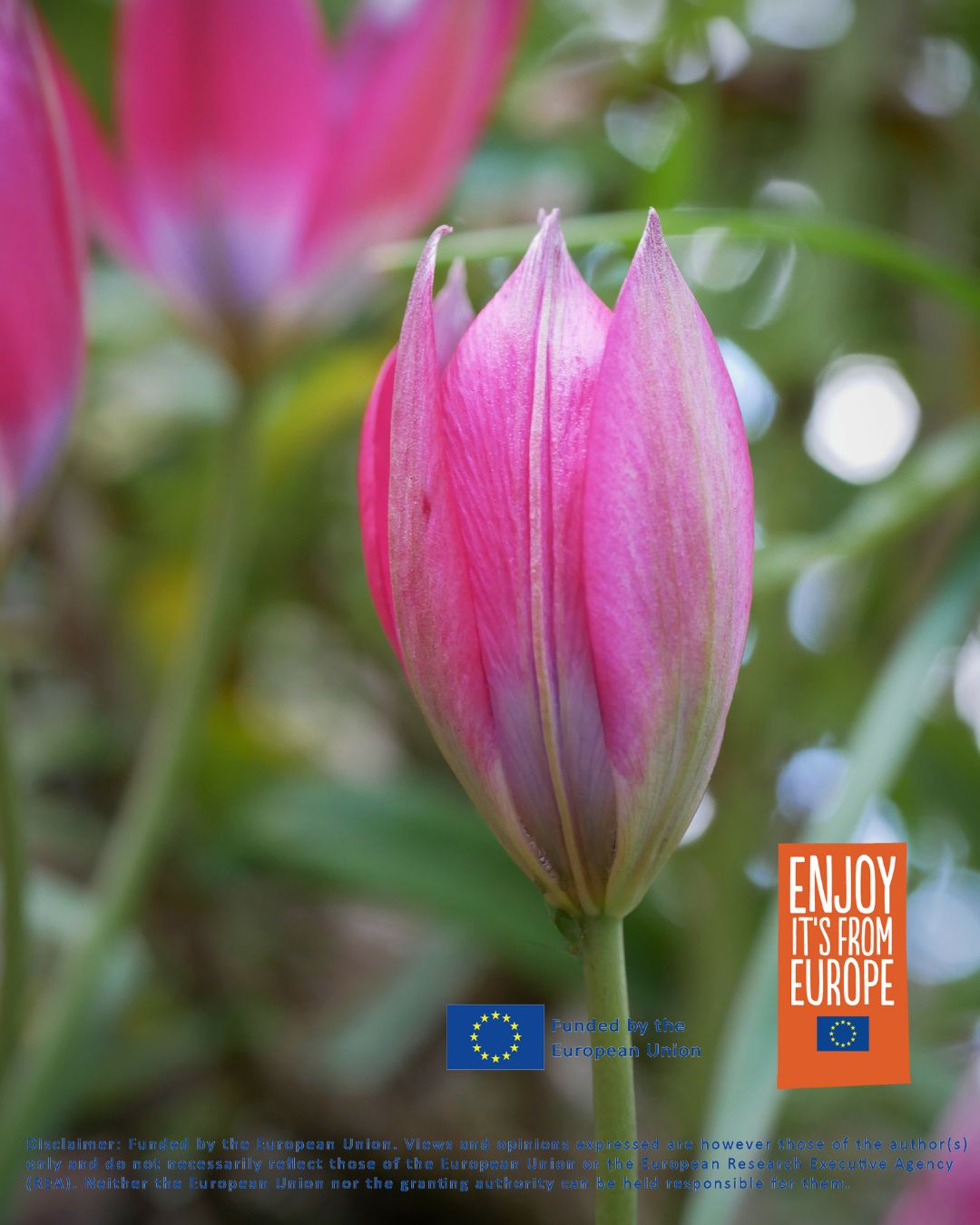
I started with Tulipa humilis ‘Little Beauty’. Hot pink petals, deep blue centers, and a stature that barely rises above the surrounding groundcover. They’re miniature compared to Darwin hybrids—almost modest by comparison.
And they surprised me.
My front bed is crowded with daffodils that desperately need thinning, a job I keep putting off until the foliage dies back. Among all that green, I began to catch flashes of bright pink—pinker than I expected. Not loud, exactly, but assertive in a quieter way. In a New England spring, where grey skies linger and the ground still feels undecided, that color cut through the gloom beautifully.
They didn’t perform. They belonged.
Nestled among rocks and perennials, they looked right—like they had always been meant to be there. Less fireworks, more candlelight. I found myself wishing I’d planted more.
Of course, the real question remains unanswered: will they come back?
Will they clump, multiply, and naturalize the way their reputation suggests? I don’t know yet. Gardening has always been a long game, and this feels like an act of gardening faith. A willingness to wait. To observe. To invest in something that promises improvement over time rather than immediate payoff.
What I do know is this: the places where they did best were sunny and sharply drained, often in rocky soil with less organic matter. Where the soil was richer and softer, they seemed less happy. That detail matters—not as instruction, but as information gathered slowly, in place, through attention.
And that’s the shift I’m interested in.
As my taste has changed, so has my tolerance for plants that demand everything and give very little back. I’m increasingly drawn to plants that earn their place by returning, by adapting, by quietly improving with age. Plants that don’t ask to be admired so much as lived with.
This way of gardening isn’t flashy. It doesn’t photograph as well. It asks for patience and a willingness to let go of control. But it feels truer—to the landscape, to the season, and to the gardener I’ve become.
I’ll keep experimenting. I’ll plant more species tulips this fall. I’ll pair them with plants that share their temperament. And I’ll keep paying attention.
Notes from the Garden: Exploring Species Tulips
(For those who want specifics)
Species tulips I’m growing or considering
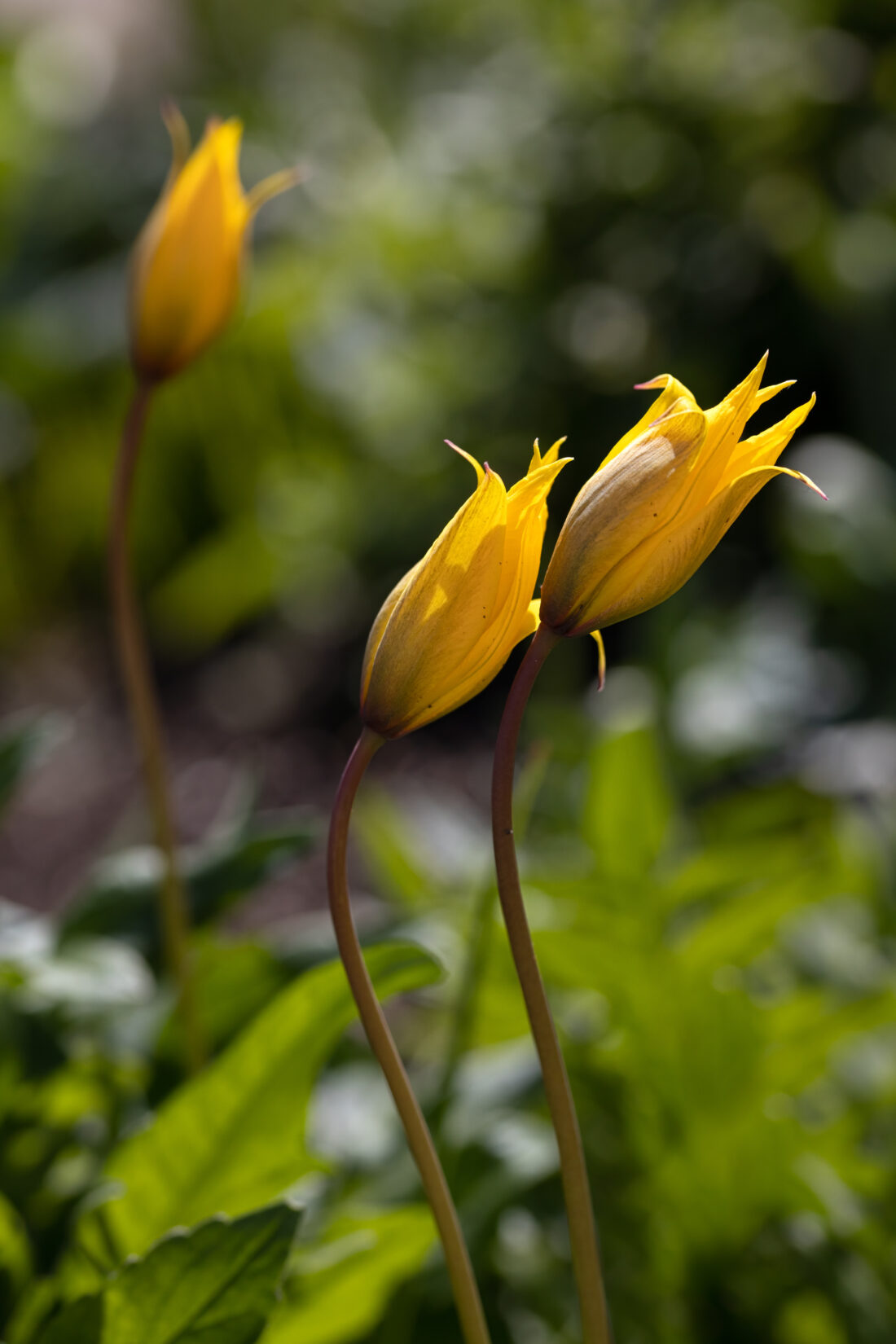
- I want to try Tulipa sylvestris in the woodland areas of my garden (pretty yellows with nodding heads).
- I researched Tulipa linifolia. If you are interested in trying these types of bulbs, this is one to look into. I’m giving it a pass-through—I just don’t love this shade of red in my garden.
- Tulipa clusiana ‘Lady Jane’: (also known as a lady tulip) Features slender, bicolor petals—rosy-pink on the outside and white inside. Other T. clusiana varieties are also bicolor but in color combos that are a little less appealing to me (white with red, red with yellow, etc).
- Tulipa tarda: A low-growing tulip with star-shaped yellow and white flowers, known for its ability to naturalize well.
- Tulipa bakeri ‘Lilac Wonder’: Boasts lilac-pink petals with a yellow center, adding a soft touch to rock gardens.
- Tulipa humilis ‘Persian Pearl’: Displays vibrant magenta petals with a contrasting yellow center, ideal for early spring color. I think this could be a great addition to the variety I already have.
- Tulipa saxatilis: Known for its fragrant, pinkish-lilac flowers with a yellow base, it thrives in well-drained soils.
Native North American plants with a similar spring presence
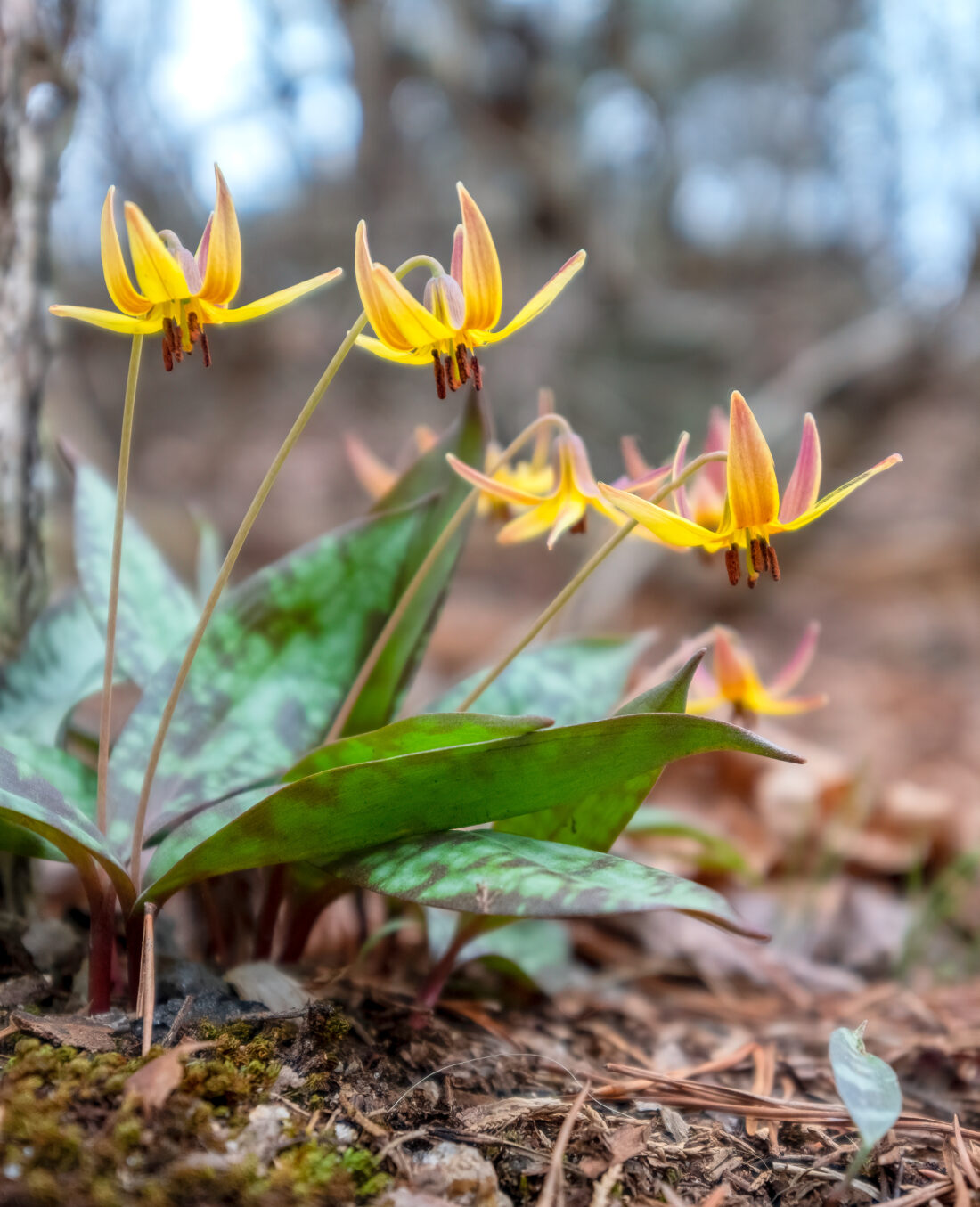
- Erythronium americanum (Trout Lily): A spring ephemeral with mottled leaves and nodding yellow flowers, perfect for woodland gardens. I’m plotting ideas where these are paired with some of the wild tulips and trout lilies. I live in the native range of these plants so hopefully they will thrive in my garden.
- Erythronium albidum (White Trout Lily): Features delicate white flowers and thrives in moist, shady areas.
- Erythronium mesochoreum (Prairie Fawn Lily): Native to the central U.S., it offers pale lavender to white blooms and adapts well to prairie settings.
Tulips aren’t native here, but pairing species tulips with spring ephemerals that return reliably has become part of how I’m thinking about longevity and restraint in early-season planting.
More tulips and other bulbs
This post was sponsored by the European Bulb Council and Flowerbulbs.com.
+comments+