


My strawberries hate my strawberry tower. They literally run from it.
Last year in my book writing garden absence, I let them (the strawberry plants) run as they wished as I was failing the time to reign them in. Subsequently, if you drive by my house this weekend, you will see a sign at the end of the driveway. It says this: “Free Strawberry Plants – You Dig”.
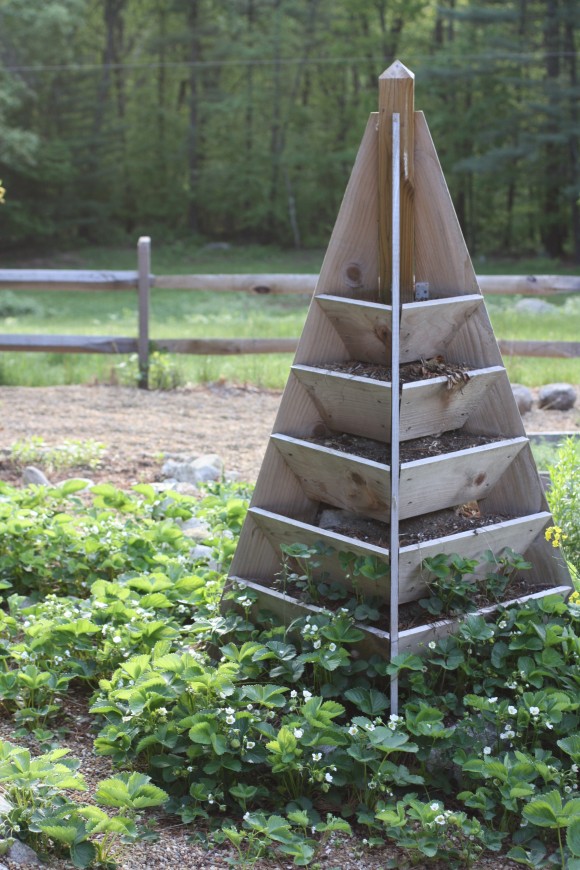
I have decided not to fight them (the strawberry plants) on this strawberry tower planting issue anymore. Instead, I am going to let them have some of the garden pathways that they insist on taking over.
They seem to be ok with me walking over them on occasion, and I appreciate that they are pretty effective at choking out any other weed that might want to take hold. Plus, there is the profusion of homegrown strawberries. I really can’t argue with that.
Now that the Strawberries are gone – What to do with the Strawberry tower?
But I am unsure of what to do with the tower. I have a few thoughts…the first is to fill it with a succulent garden. I think that would be a stunning focal point, but my reality is that I live in Massachusetts – not Southern California and the selection of hardy succulents is limited. So much so that I think this plan would likely turn out to be nothing more than a study in Hens and Chicks.
The second is to fill it with herbs – an idea that I also love, but frankly – given the extreme amount of herbs I have planted throughout the rest of my garden – it is something that I really don’t need. So I think my last idea – to fill it with a striking collection of annuals is where I am going to end up.
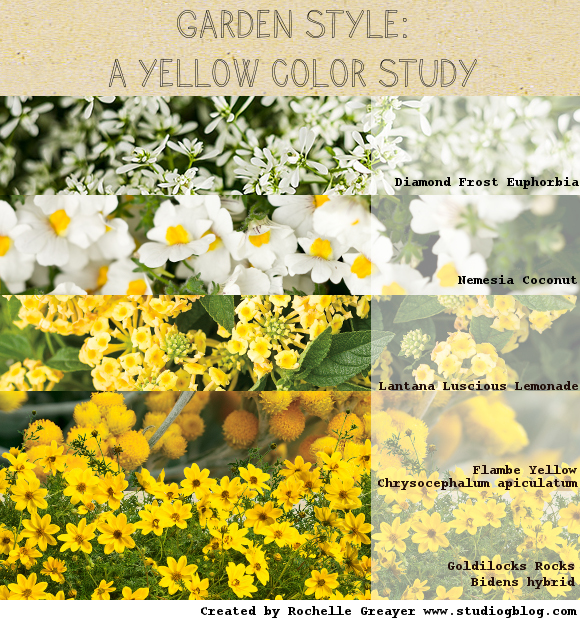
I am not so big on mixed containers and find that single-plant containers are easier for me to manage. Plus, I prefer a more modern look – but I think this is the place for an exception of sorts. The layers of the strawberry tower are calling out to me; they seem to be asking for a color study in ascending stripes.
I am choosing yellow and plan to work a gradation from white to deep yellow over the five levels (I will let the strawberries have the bottom since it is what they insist). There is a little worry in the back of my head that the Coconut nemesia will not like the position (being a shade lover) but this is a tricky sort of thing since one side gets way more sun than the other. I am looking forward to seeing how this experiment works out over the season.
A yellow-inspired annual planting plan for the strawberry tower:
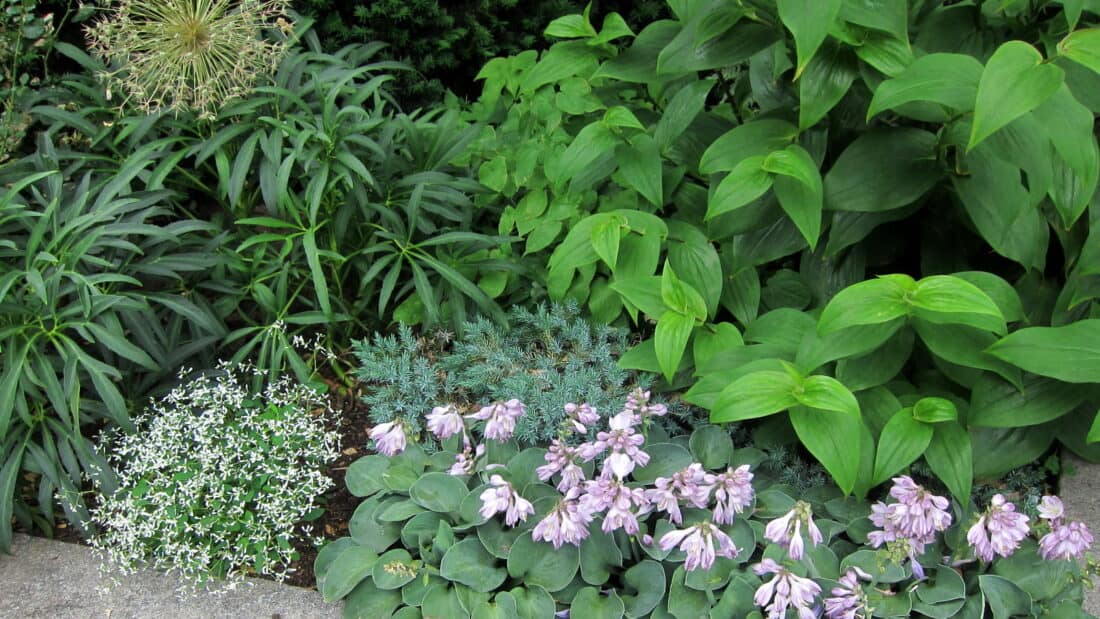
Diamond Frost Euphorbia – Diamond Frost Euphorbia (Euphorbia ‘Diamond Frost’) is like the “glitter” of the garden. With its delicate, airy appearance, its tiny, white, cloud-like flowers seem to float above the foliage, creating a dreamy, ethereal effect. It flowers profusely from spring to fall and provides a soft, romantic backdrop or a starry accent. I chose it because it is easy to care for and versatile (hopefully filling out on both the sunny and shady side of the tower).
Nemesia Coconut – I’ll be honest – I don’t get the ‘coconut’ name of this nemesis. It looks like popped popcorn to me. White with yellow centers, nemesia normally likes a little shade, so I am hopeful that the plants above and below will shade it slightly. I might be hoping for too much.
Lantana Luscious Lemonade – Lantana loves the sun and will tolerate the drier conditions of the tower with ease. I hope that it will be so happy and healthy that it will fill in other layers that might not work as well. Fingers-crossed.
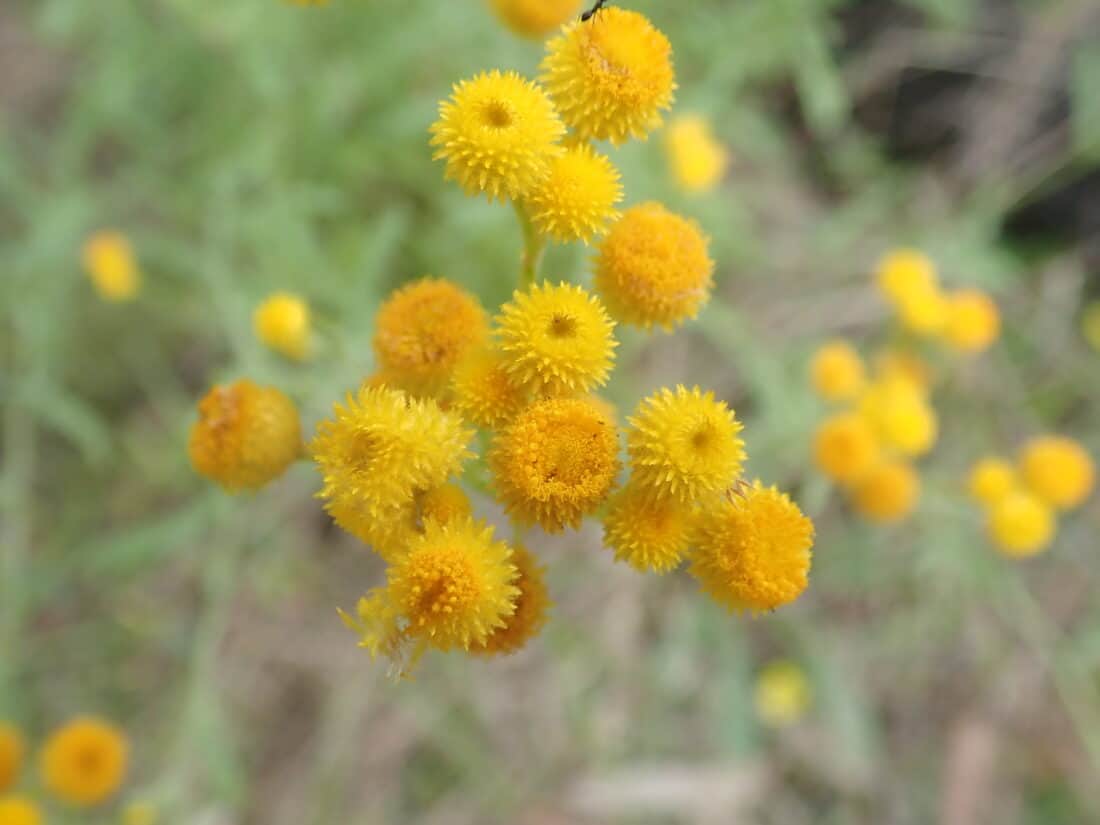
Flambe Yellow Chrysocephalum apiculatum – With its silver foliage, you can tell that Chrysocephalum or Strawflower is a happy sun and heat lover. The yellow flowers are deep, and I think that the texture of this plant will contrast nicely with the flat flowers of the Bidens and the softness of the nemesis.
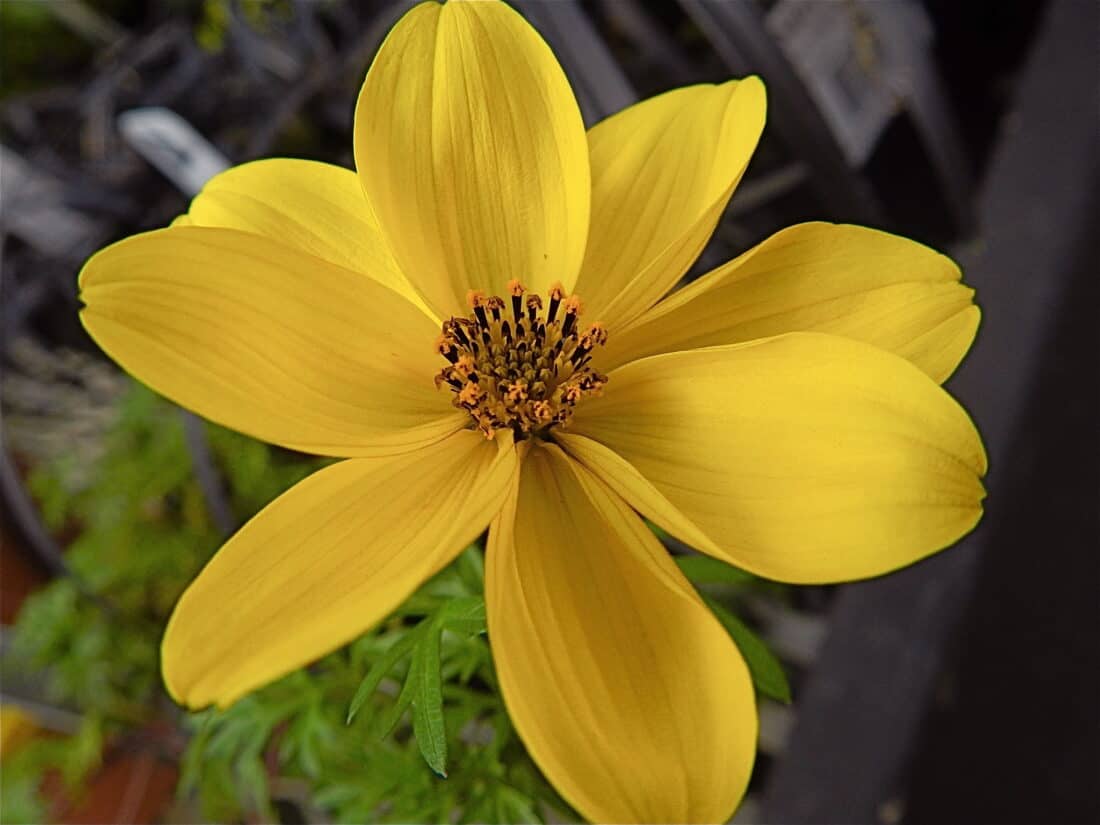
Goldilocks Rocks Bidens hybrid. – Bidens are great rock garden plants and this lowest area (right above the strawberries) are award-winning for their floriferous toughness.
End of Season Update:
This planting was okay – but as suspected, some of the less tough plants that don’t want full baking sun (struggled). The nemesis was miserable, and I realized the tower really has a moisture retention problem. It makes sense, given how tall it is and how hard it is to water. I am back to wondering if the herb garden idea might be a lot better in future seasons.
More Strawberry Tower Posts:
Images: Images courtesy of proven winners and rochelle greayer.
Rochelle,
I would think the Nemesia could take full sun in your area, but I may think of MA as cooler than it actually is 🙂 They do fine in full sun for us (VA) in spring and early summer when night temps aren’t oppressive. Sunsatia White, Yellow, and Red had an overhaul a few years ago and they now do well for us in full sun in fall too. I suggest flip flopping the Chryso and Lantana as the Lant will want to be bigger. Thanks for a terrific blog 🙂