


It’s January 2024, and I’m thinking about which new-to-me plants I want to experiment with this growing season. Near the top of the list are turtleheads. These native perennials feel like a cross between snapdragons, foxgloves, and impatiens — with unusually handsome foliage to boot.
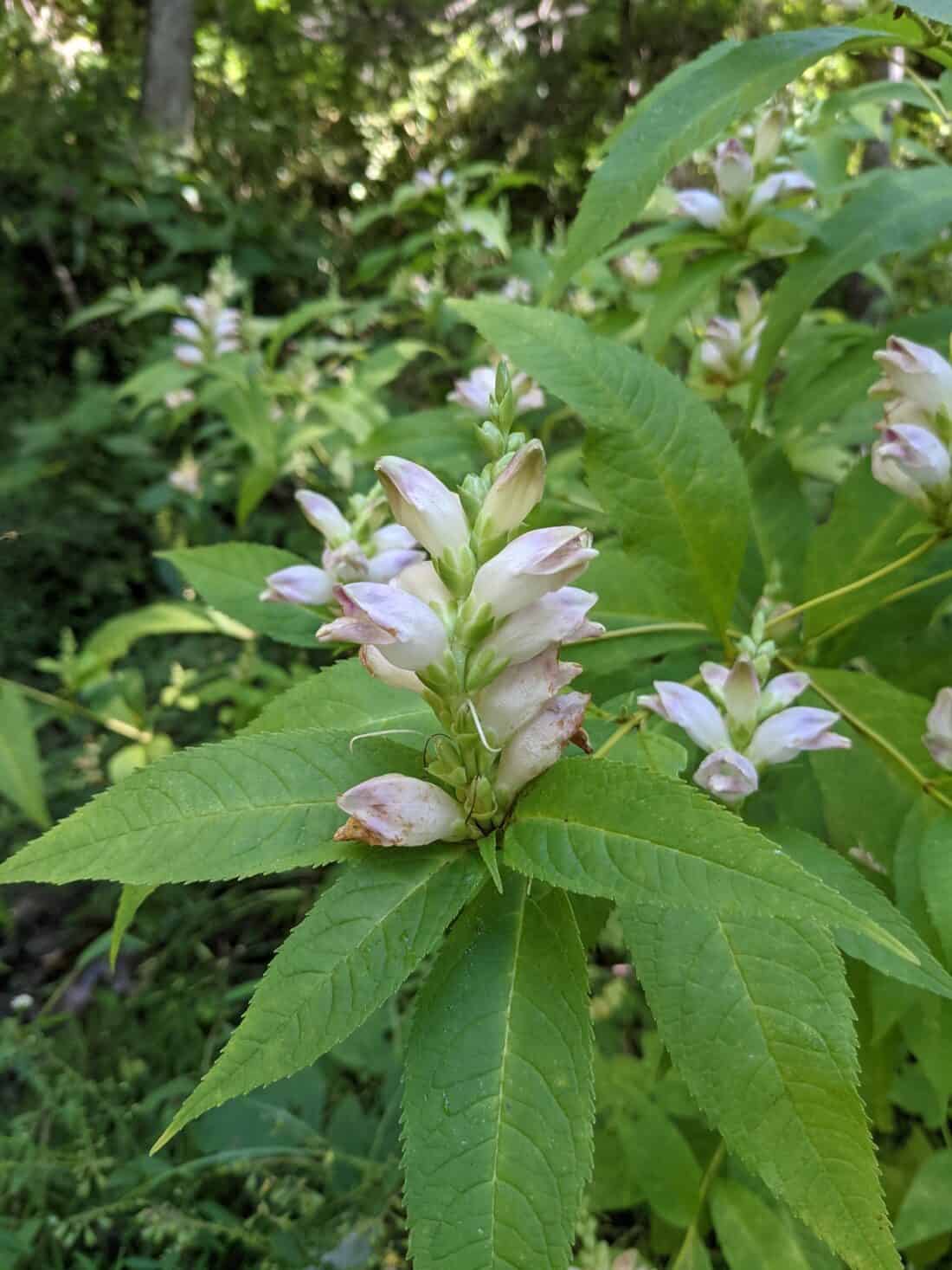
There are several species and cultivars of turtlehead, all native to North America, but Chelone glabra — the white-flowering turtlehead — is the only species truly native to New England. (checked by Go Botany – Native Plant Trust’s guide to New England Native).
The pink and red-flowering species, including Chelone obliqua and Chelone lyonii, are native to other parts of the eastern United States, particularly along the southeastern seaboard and Appalachian regions.
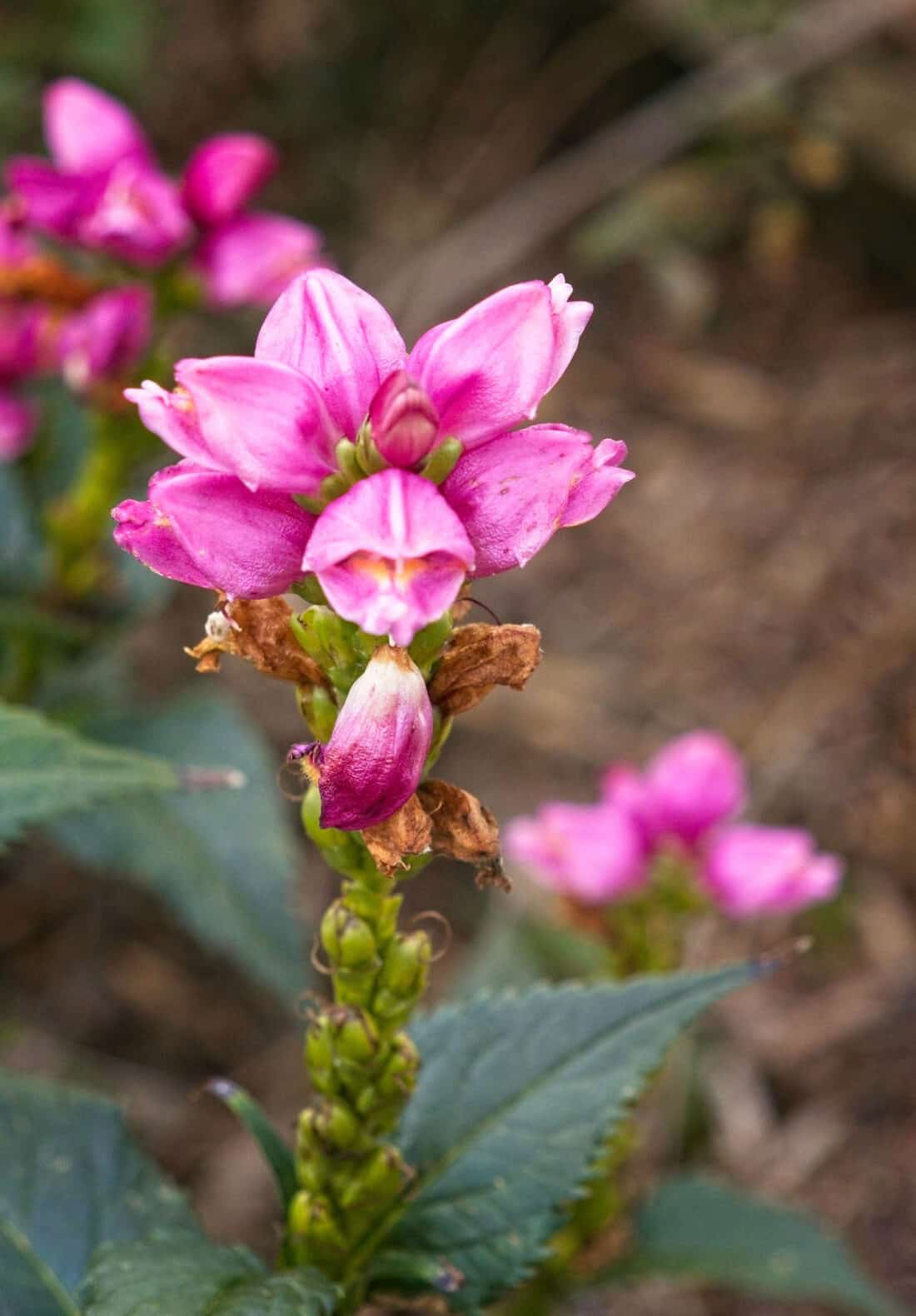
Turtlehead Is One of the Best Native Plants for Moist Shade
The upright, bushy foliage is almost as compelling as the flowers themselves.
Turtleheads bloom in late summer and early fall and perform best in moist soil with partial sun or light shade though established plants can tolerate more average garden conditions than many people realize.
They are native to a large swath of states from Michigan and Wisconsin down the central part of the country and through the Appalachians to the mid-Atlantic states and North and South from Maine to Florida.
Plant them in large drifts at the edge of a pond , stream, or bog garden. Use them in flower arrangements, or grow them to attract pollinators and hummingbirds late in the season.
Favorite Plant Combinations With Turtlehead
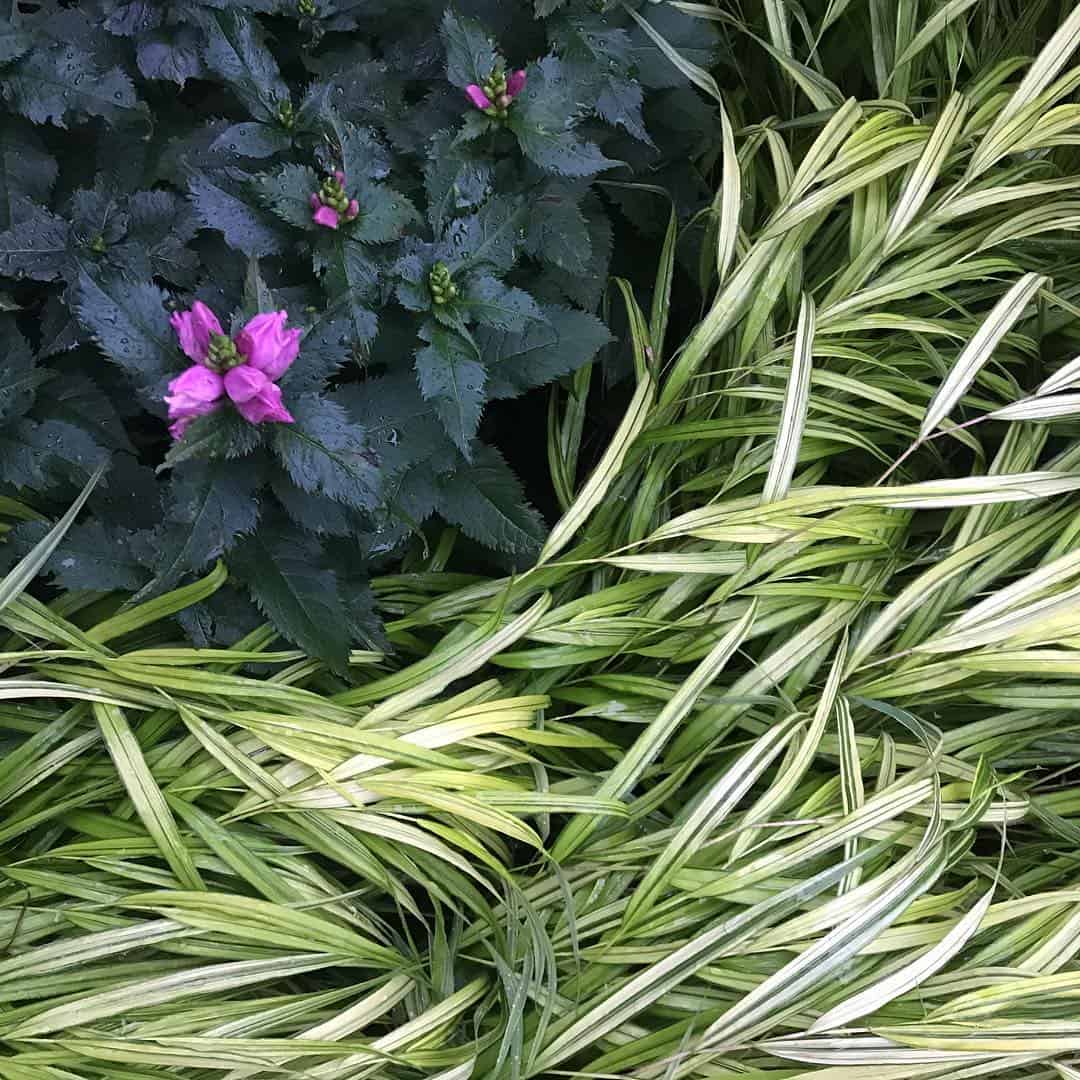
Chelone lyonii ‘Hot Lips’ may be the most useful selection for garden designers. The dark foliage and saturated pink flowers give it more visual presence than many of the other cultivars.
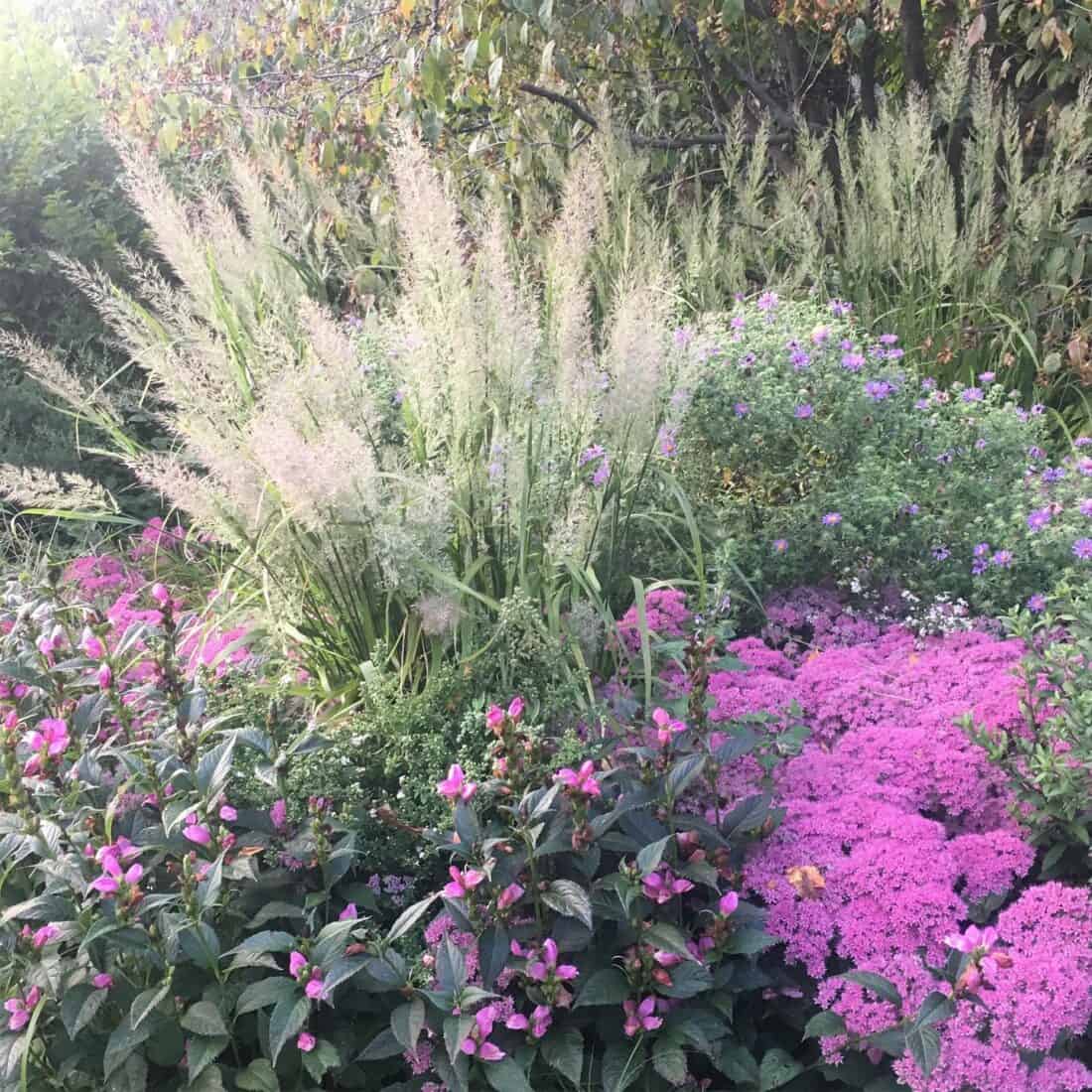
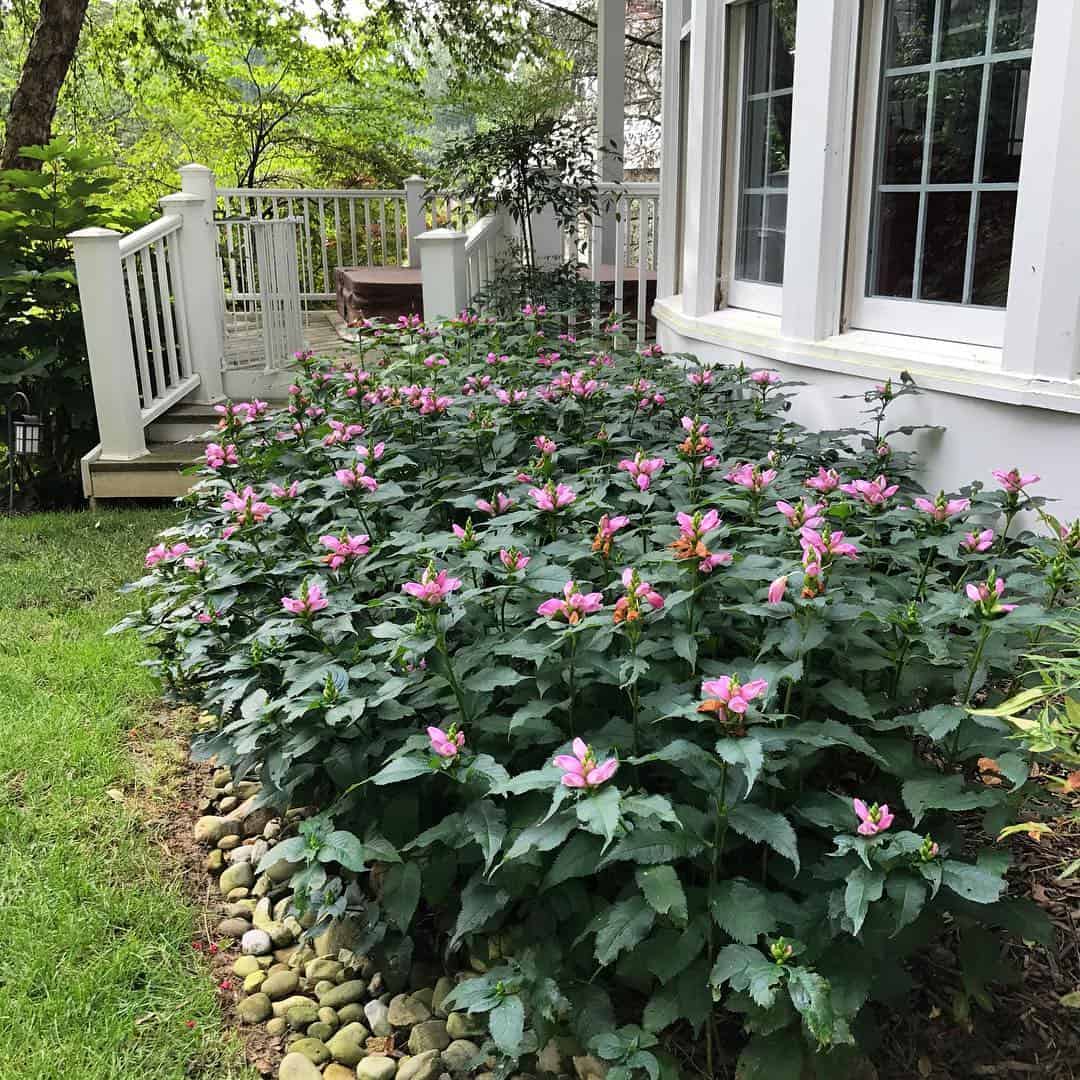
I love the simplicity of this planting — the mass of turtlehead feels lush, healthy, and deeply satisfying.
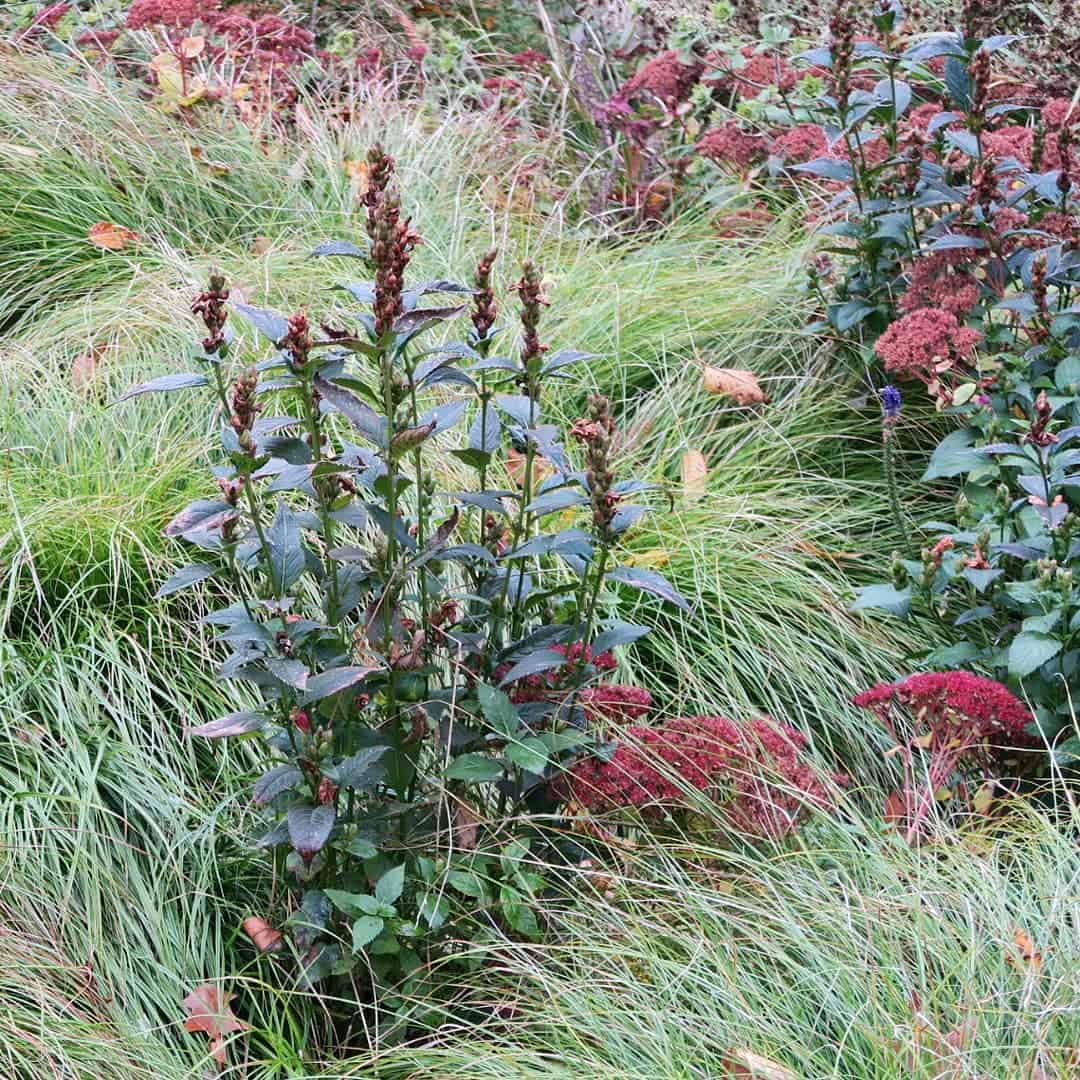
Why Is It Called Turtlehead?
The genus name Chelone (pronounced kuh-LO-nee) comes from Greek mythology. Chelone is named after a nymph who was turned into a turtle as punishment by the gods. The name references the flower’s turtle-like shape — which is also where the common name comes from.
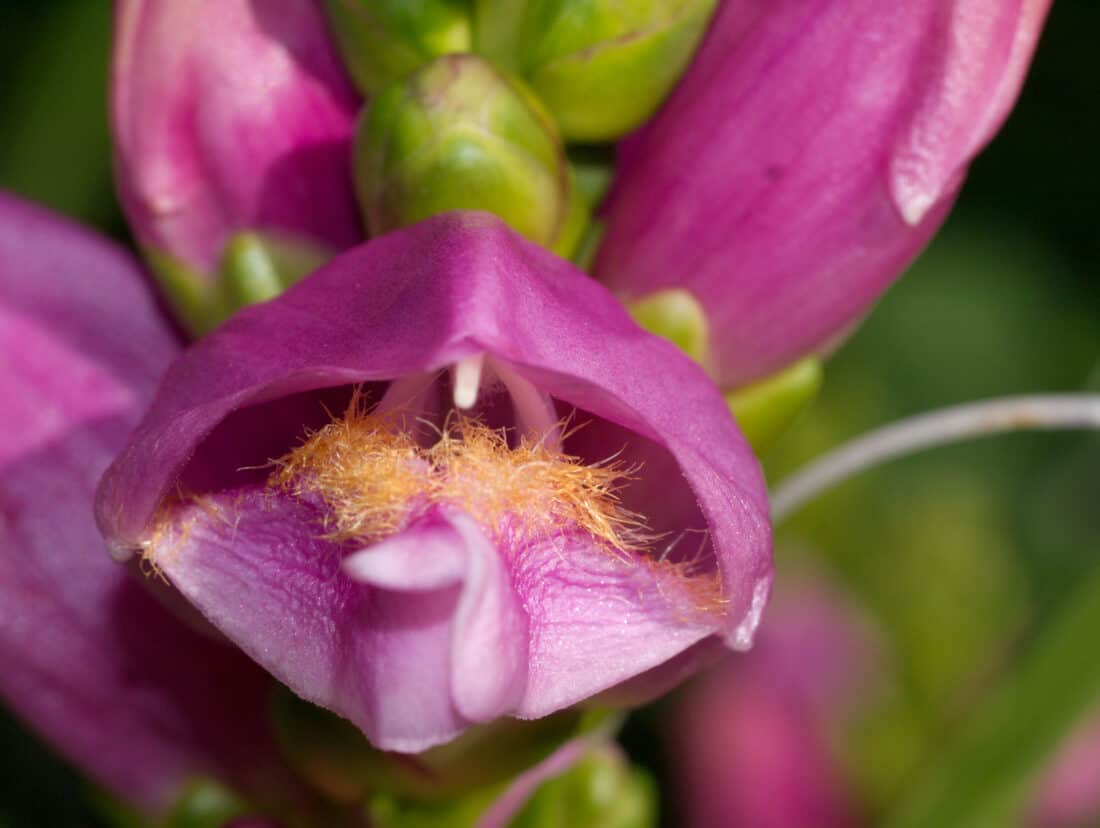
The blooms typically have a two-lipped shape and are tightly packed along the flower spikes.
The shape of the flowers isn’t just for show; it’s a clever adaptation to encourage pollination by bees. Larger bees typically pollinate Chelone. The bigger bees are strong enough to pry open the blooms and access the nectar and pollen.
While bees are common pollinators, the tubular flowers of Chelone also attract hummingbirds, making them an excellent choice for a wildlife-friendly garden.
Chelone plants are native to North America. They are commonly found in moist woodlands, along streams, and in other wet, shady areas.
A Valuable Late-Season Native
Turtlehead flowers in late summer and early fall, providing fresh color and pollinator activity when many other perennials are beginning to fade.
Once established, turtlehead is a surprisingly resilient perennial, especially in moisture-retentive soils.
There are several species and varieties of Chelone, including Chelone lyonii (pink turtlehead) and Chelone glabra (white turtlehead), each offering different bloom colors and plant characteristics.
Turtlehead is known for being hardy and relatively easy to care for, preferring moist, rich soils but can tolerate periods of drought once established. It’s a great plant for gardeners looking to add reliable and unique blooms to their late-season garden.
+comments+