


What immigrant gardens reveal about access, survival, and belonging
Editor’s note: This piece reflects a moment in time — and an ongoing question. It’s not a finished story. It’s an invitation to keep listening.
This weekend was my birthday, and the celebrations began on Saturday morning with brunch at Pier 6 in Charlestown, Massachusetts. Pier 6 has sweeping views of Boston across the harbor, best enjoyed from its rooftop patio. The food is solid. Getting there, though, still requires passing through a neighborhood that has long been in flux.
What struck me most was how different Charlestown feels every time I visit.
The last time I was there was just over a year ago, when I set out to write a piece about immigrant gardeners in Boston for the print edition of PITH + VIGOR. At that time, the neighborhood felt unsettled — street by street, block by block, you could feel sharp contrasts in income, culture, and belonging. It made me uneasy then, and even more so the year before.
This weekend, the change was unmistakable.
I felt more at ease. The area is cleaner, less visibly worn. I felt safer — and that made me wonder whether the people who live there feel safer too. And if they do, what does that safety cost? More pointedly: does what feels like progress to me make the place less hospitable to the people I spoke with eighteen months ago? I hope not.
I don’t pretend to have answers. Gentrification is complicated, and I’m wary of drawing neat conclusions. Instead, I find myself trying to sit with the tension — and to understand more than one side at once.
Which is why I want to reshare what I wrote then, originally published as “Immigrant Gardeners” in Issue #3 of PITH + VIGOR.
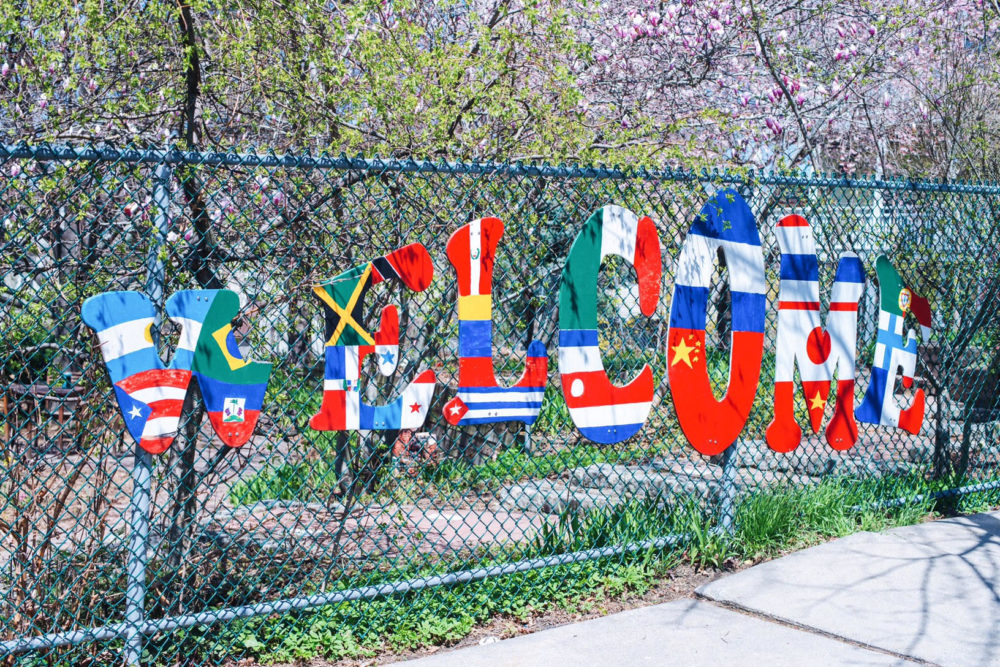
As gardeners across the region began making their way back outside in the spring, we set out — as we had in previous issues — to meet people in their gardens and talk with them about their plans, aspirations, and projects for the season.
This time, we had a very specific goal. And to say we struggled to achieve it would be an understatement.
The previous fall, after presenting the first issue of PITH + VIGOR to a Boston-based group of women designers, we received feedback that criticized our editorial focus. We were told the magazine felt “too white,” and that it did not fully reflect the breadth of gardeners in our community.
Whether or not that criticism was entirely fair — after all, we had only published one issue — it stayed with me. Our intention had always been to represent a wide range of people and practices. If that wasn’t coming through, then we were falling short of our own goals.
That spring, we set out to follow a group of gardeners who are largely absent from mainstream garden media and from the broader American conversation: immigrant gardeners.
We hoped to learn about new vegetable varieties (we did), unfamiliar techniques, and knowledge passed down through generations but rarely written about. More than that, we wanted to understand how gardening functions as survival, cultural memory, and continuity — especially for people whose connection to home is fragile or fractured.
To be blunt, we were not successful.
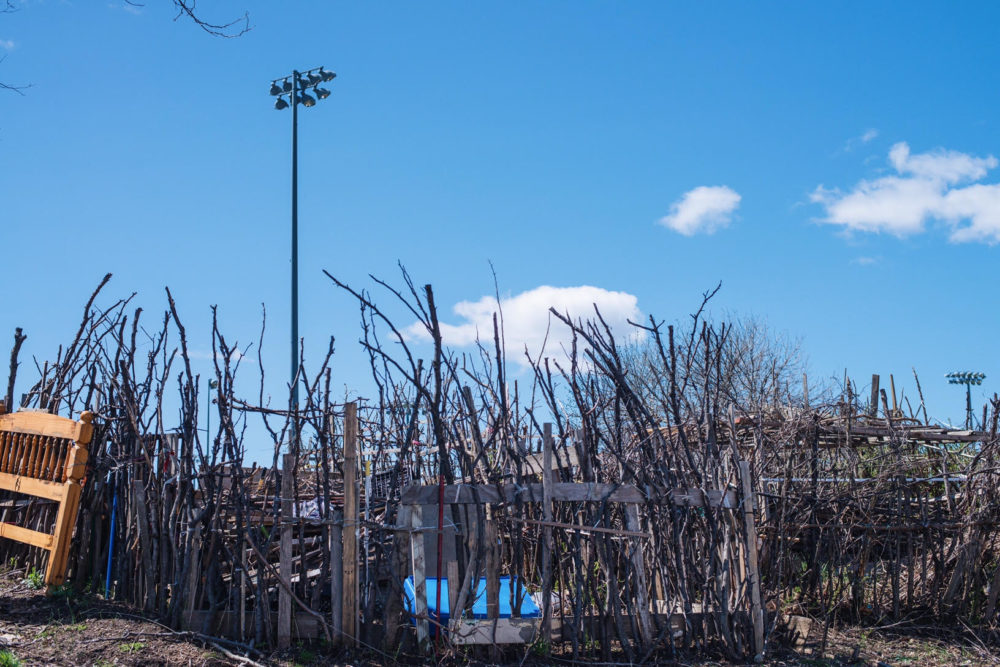
As we visited community gardens in Charlestown — populated entirely by immigrant farmers — and in other parts of Boston, we quickly realized how difficult this would be. We spoke with immigrants from Brazil, China, and Cape Verde. We encountered language barriers, understandable distrust of our motives, cultural differences around photography, and real fear that our presence could cause trouble.
At times, we were met with outright hostility.
We tried to build relationships and explain our intentions, but the reality is that we didn’t get the story — at least not for that issue. What we did get were fragments, and lessons we couldn’t ignore. It became clear that trust would take time, and that this work couldn’t be rushed or extracted.
Many of the people we spoke with did not want to be identified by name, nor did they want their words or images publicly associated with them. While we did learn about unfamiliar vegetables and notice inventive trellises and growing methods, the most important insights came from the few statements people were willing to share — and from what those statements revealed beneath the surface.
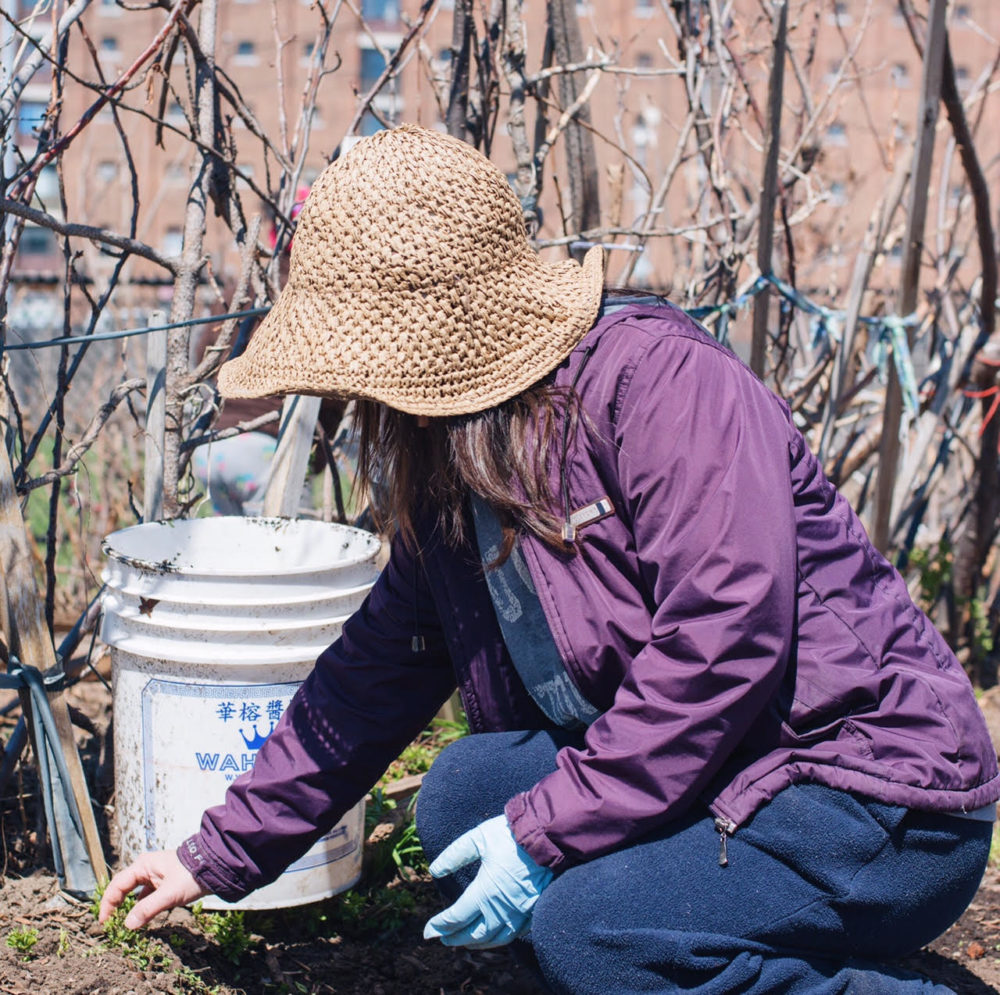
“Most people have no clue about the people who have to depend on home gardens because other food systems don’t serve them.”
“The people who benefit from farmers markets are not the poor – they don’t have enough money.”
“People steal stuff here. I’ve been here <gardening> for 12 years. Before, there were no people who came here, but now they come here and take the food–it’s so sad.”
“The Chinese supermarket in Chinatown has some—but it is difficult to grow those seeds. They are many years old—too old.”
“We grow bok choy, snow vegetables, beans, watermelon— but not watermelon—it’s different. We save our seeds sometimes. But sometimes we bring them from home.”
In honoring their request for anonymity, we are not sharing names or images. But the words stand on their own. They carry their own weight — and their own urgency.
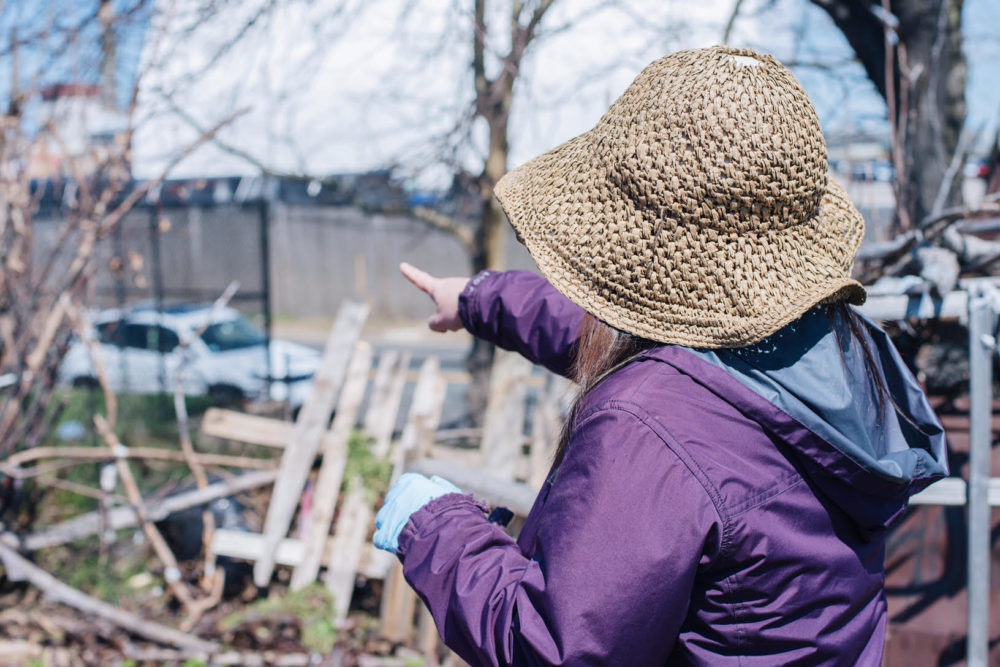
Honoring their request, the sources of these comments and their images are not being shared. But we think the words have their own anonymous power. We hope you agree.
Originally reported for PITH + VIGOR (print). Updated for context. images by Kelly Fitzsimmons for P+V
I am VERY confused by this article. I have a garden in the Berekeley Community Garden in the South End. I also live in Chinatown and my son attends a public school with a very diverse community. We have gardened side by side with “immigrant” gardeners for over 8 years. I am also a horticulturist. I would be happy to help you finish this article. It is fantastic topic and one that would be very interesting to readers. I hope you will take me up on my offer. I think it is irresponsible to leave your readers with the impression that Boston immigrants are suspicious and uneasy around their neighbors. To be honest, there is some of that attitude in every city resident but it quickly falls apart once you work beside them. -Erin Frost
I’d love to do that Erin!! Thanks for the offer! please email me: rochellegreayer@gmail.com
Whereas I think it’s irresponsible that someone who has never experienced xenophobia in the US thinks she needs to counter the first-hand testimony of real people who are too nervous to have their names and faces linked to their words. Can we never have an open discussion about the pitfalls of even benevolent bigotry without someone needing to insert a NotAllAmericanGardeners strawman into the discussion? Rushing to silence people or contradict them is one of the reasons this problem exists in the first place because white people would prefer to keep their blinders on and not be burdened with a guilt trip. And I don’t understand the scarequotes around “immigrant.” It’s not a bad word or a pejorative. The experiences of “immigrants” matter and are markedly different from those of first- and second-generation Americans.
Thanks for the food for thought, Rochelle. Since then, have you all made efforts to recruit people of color and multilingual people to work for you?
Ok, Saurs I could take the quotation marks around immigrant off if that will make you feel better. But I am not certain it matters. We have many gardeners in our community garden. Not all of them are immigrants, many of them are 2nd and 3rd generation children of immigrants. They choose to garden in the style of their family’s heritage, they are often lumped all together as poor immigrant gardeners. They are not all Chinese either many of them come from other Asian and island countries. We have lots of voices in our garden. I think it would be great to talk about their gardens. I know that many are hesitant to speak to unfamiliar faces. I feel that way too. Often visitors stress what a great “deal” we have and how everything is “free”. It’s not. Our garden has been at risk of being developed by city agencies twice in the 8 years we have been there. Often after garden tours, people will return and steal any unusual or plants of value from our gardens. So no one feels particularly comfortable talking about their garden to a larger audience. I can understand the reaction Rochelle may have received in her efforts. I was trying to do the exact opposite, to offer an opportunity to bring their voices to a larger audience, not silence them. Hope that clears things up for you and other readers.
Nope. You didn’t like what these specific people had to say and complained that it was “irresponsible” to report truth because it made white Boston look bad. You offered up standard weaksauce colorblind commentary about sending your son to a “diverse” school (here’s a cookie for that) and you’re now indignant that people from “island countries” are being “lumped all together” with the poors. Also, where the nonsequitur about theft comes from, I’ve no idea. There’s tonedeaf and then there’s dogwhistling, and you’re rapidly entering the latter territory.
Please stop putting words in people’s mouths. Rochelle’s interviewees explained in their own words how gentrification has hurt them, has priced them out of their own markets, and has made resources for gardening their way scarce. The thefts they were discussing were about food. And they were concerned enough about retaliation to ask for anonymity. Please stop being dishonest and trying to whitewash what Rochelle has reported, thanks.
Saurs, I don’t think any of the things you suggested. I don’t know anything about you because you did not put a link or a real name on your comments. I did include accurate links because I am respectful of PV, it’s readers, and staff. I believe you are what they call an “internet troll”. I have no problem with commenters disagreeing or having alternative ideas. But if you were really interested in a conversation about immigrant gardeners, you would find a way to have it without insulting me or my family with unfair stereotypes and assumptions.
“Internet troll (/ˈtroʊl/, /ˈtrɒl/) is a person who sows discord on the Internet by starting arguments or upsetting people, by posting inflammatory, extraneous, or off-topic messages in an online community (such as a newsgroup, forum, chat room, or blog) with the deliberate intent of provoking readers into an emotional response or of otherwise disrupting normal on-topic discussion, often for their own amusement.”