


The Jardin Majorelle in Marrakech has a way of resurfacing, even when you’re not actively looking for it. It appears in books, in images, in half-remembered palettes and gestures. It’s one of those gardens that has escaped its physical boundaries and entered the cultural imagination.
Part of that is color. Majorelle Blue is now shorthand for a very specific intensity—bold, saturated, and unapologetic. But reducing the garden to its palette misses what makes it enduring.
Majorelle is compelling not because it is beautiful, but because it is authored.
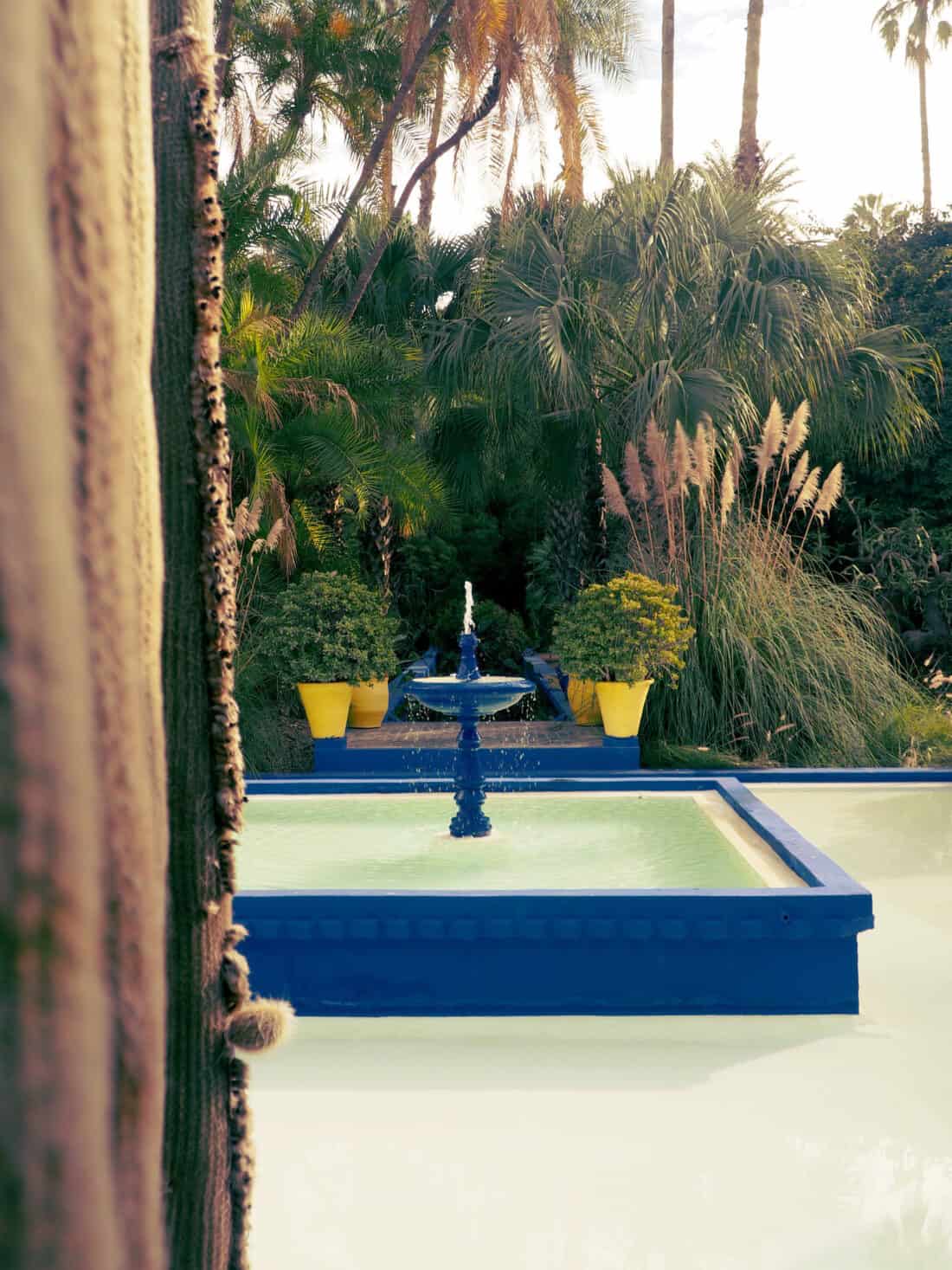
Created by the French painter Jacques Majorelle in the 1920s and 1930s, the garden was conceived as an artistic project as much as a botanical one. It draws freely from Moorish and Islamic garden traditions, folds in Art Deco sensibilities, and filters them through the eye of a modernist painter working far from home. This is not a garden striving for purity. It is a garden built on synthesis.
That hybridity matters.
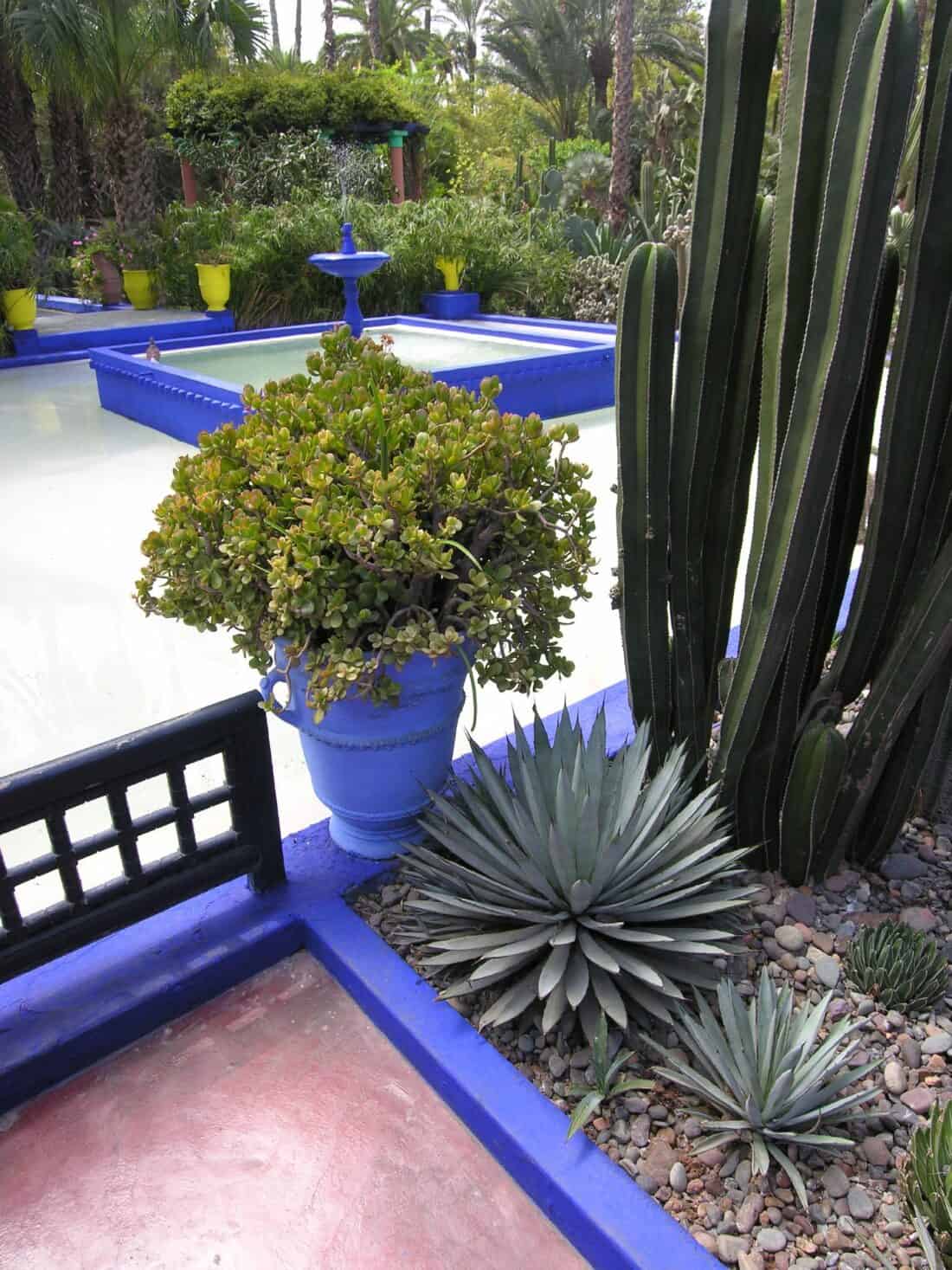
Majorelle Blue Details
Majorelle Gardens, located in Morocco, is a stunning botanical garden in Marrakech. Designed by the French painter Jacques Majorelle, the garden is known for its vibrant blue buildings, exotic plants, and tranquil atmosphere. Visitors can explore the cactus garden, bamboo forest, and lily pond while learning about its rich history and cultural significance.
images by samuel besnard and Franck
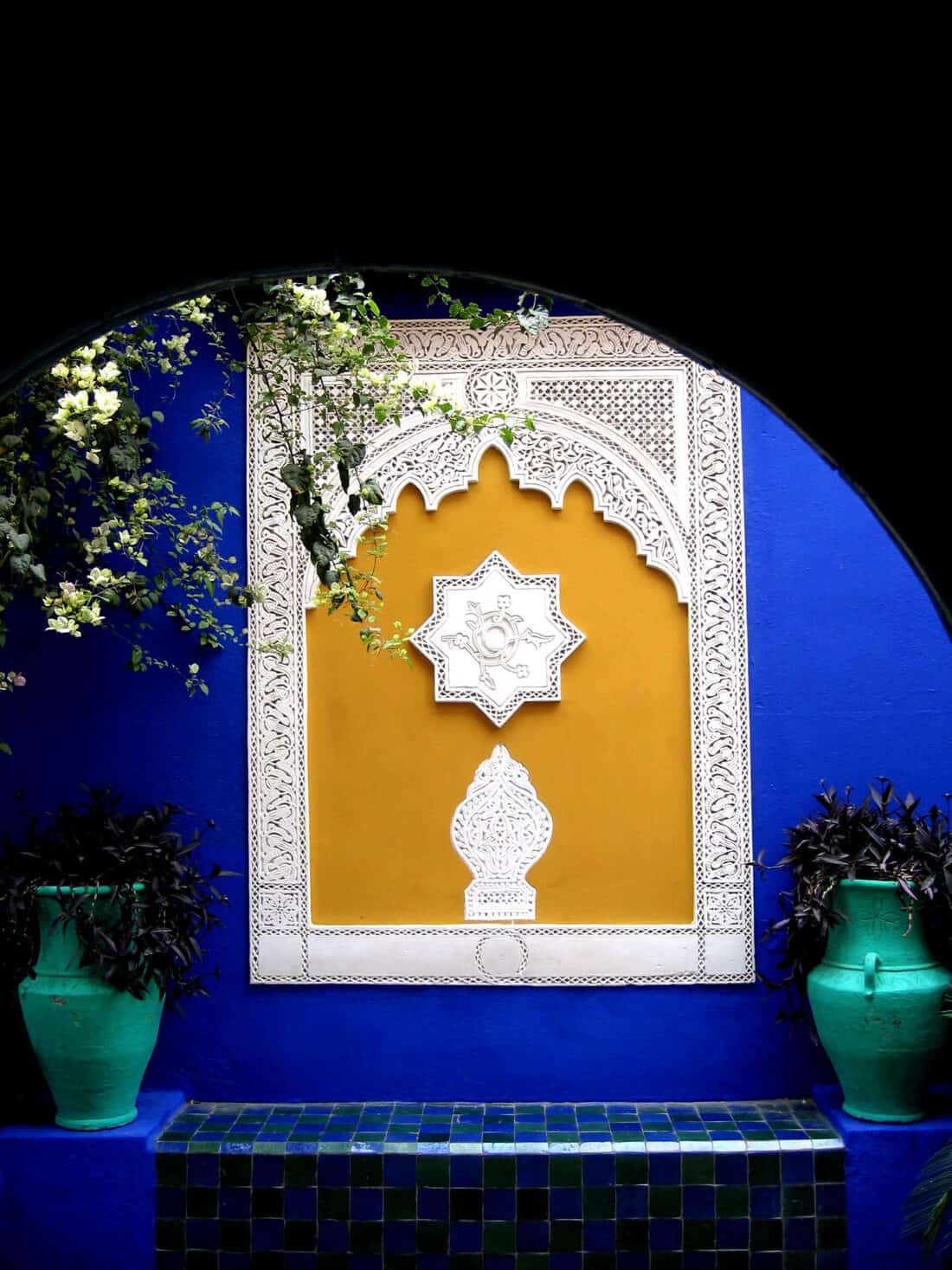
The garden’s walls, planters, screens, and water features function as more than decoration. They establish rhythm, enclosure, and contrast. Color is used structurally, not ornamentally—blue against green, yellow against shadow—creating legibility in a dense and complex planting scheme. Plants are selected not just for rarity or novelty, but for how they perform against architecture, light, and heat.
The result is a landscape that feels theatrical without being chaotic, immersive without being overwhelming.
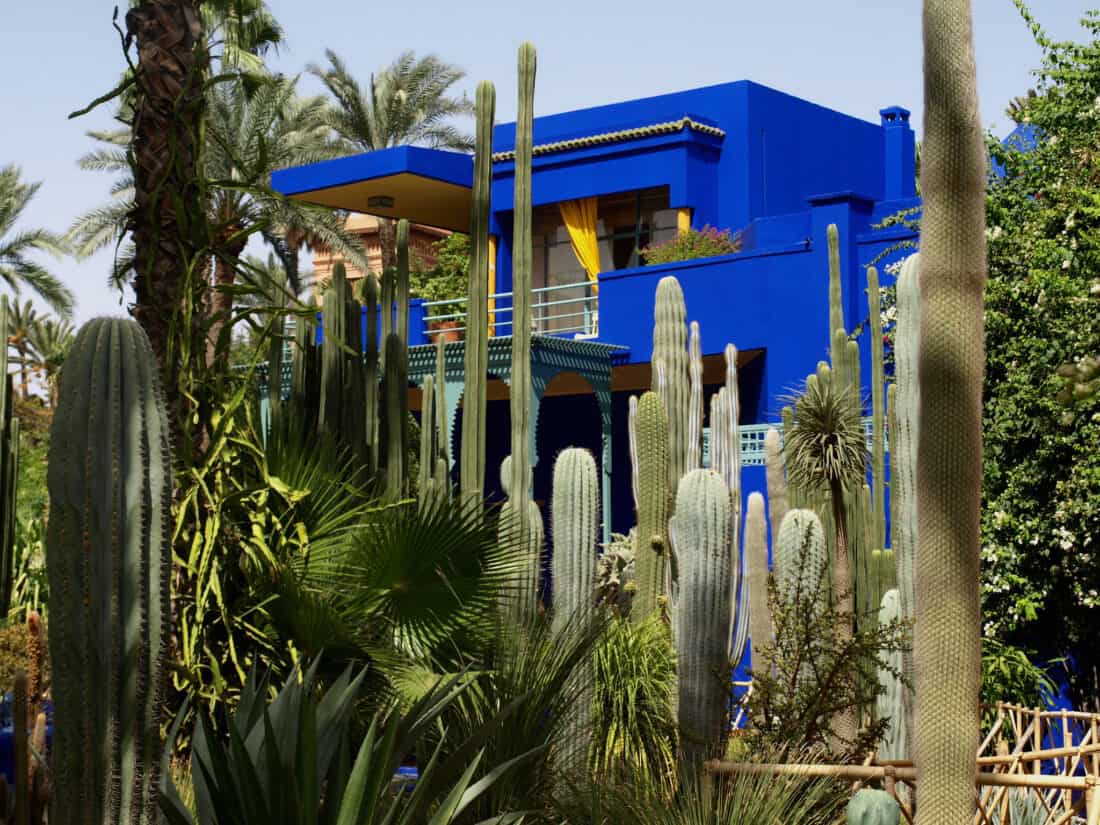
What’s often overlooked is how much discipline underpins that effect. The garden’s layout borrows from traditional Islamic garden principles—geometry, symmetry, sequence, and containment—providing a stable framework for experimentation. Within that structure, surprise is allowed. Palms give way to cacti. Shade collapses into glare. Still water sits beside riotous growth.
This balance between order and excess is one of Majorelle’s most important lessons. The garden works because it understands where freedom belongs—and where it doesn’t.
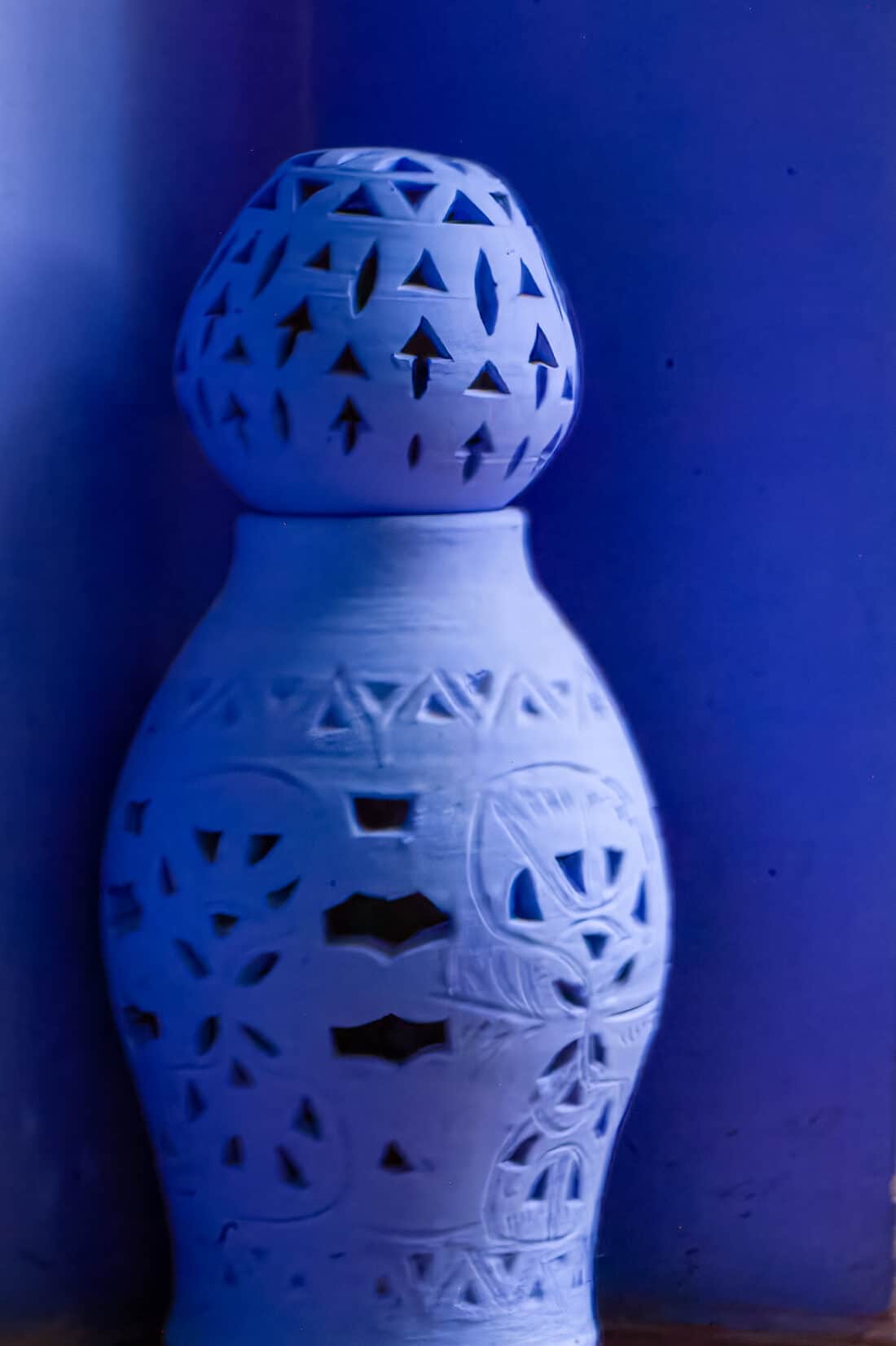
Stacked Blue Terracotta Sculpture
image by Forbes Johnston
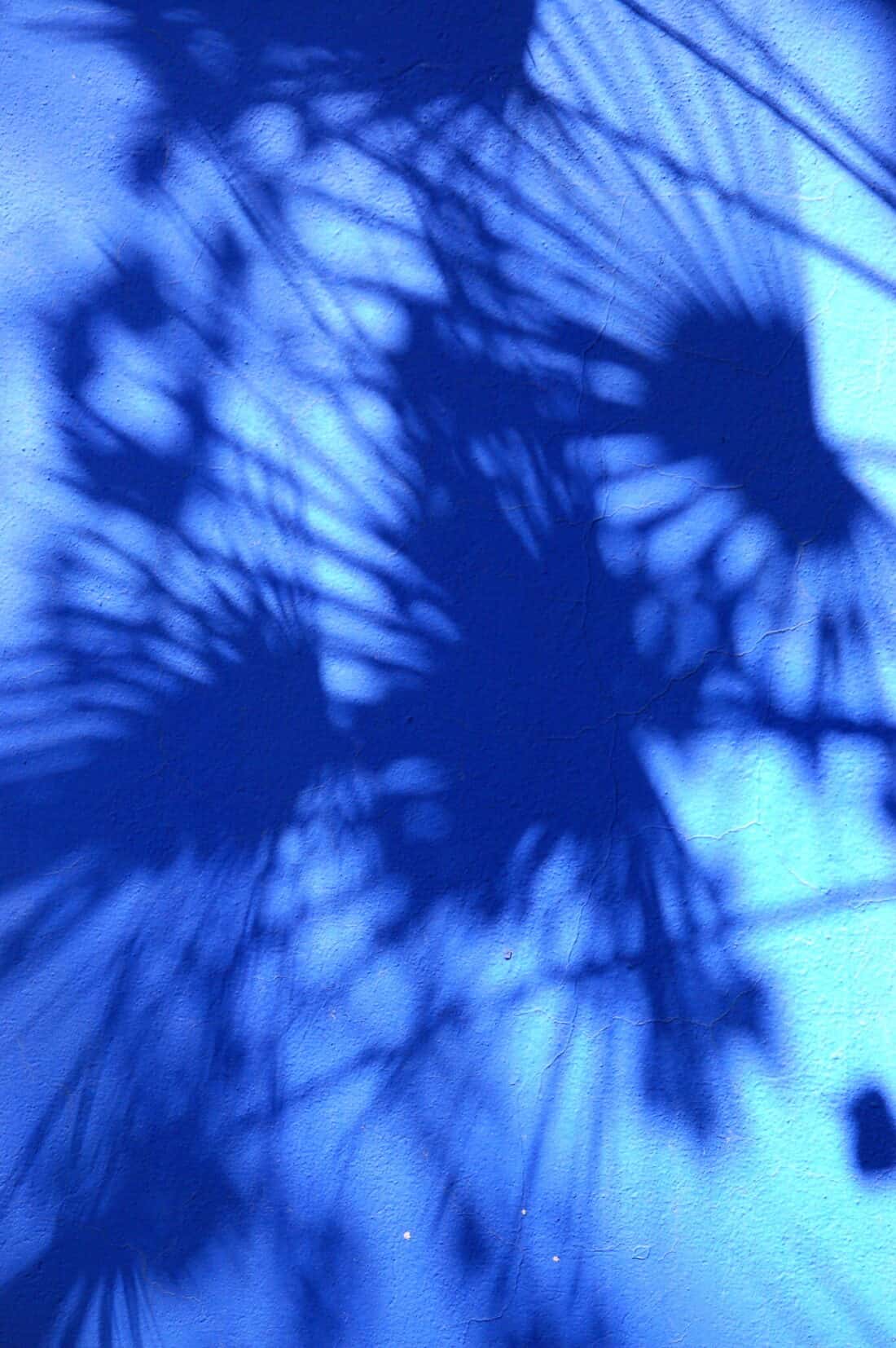
Shadowy Palms
image by laurent
Majorelle is also a reminder that gardens are not static works of art. After Jacques Majorelle’s death, the garden fell into decline before being restored and extended by Yves Saint Laurent and Pierre Bergé in the 1980s. Their intervention preserved the spirit of the place while allowing it to evolve, introducing new layers of meaning without erasing the old ones.
That evolution is not a failure of fidelity. It is part of the garden’s cultural life.
Majorelle today is simultaneously a botanical collection, an art environment, a site of tourism, and a symbol of modern Morocco’s layered history. It resists being reduced to style alone because it was never only about style to begin with.
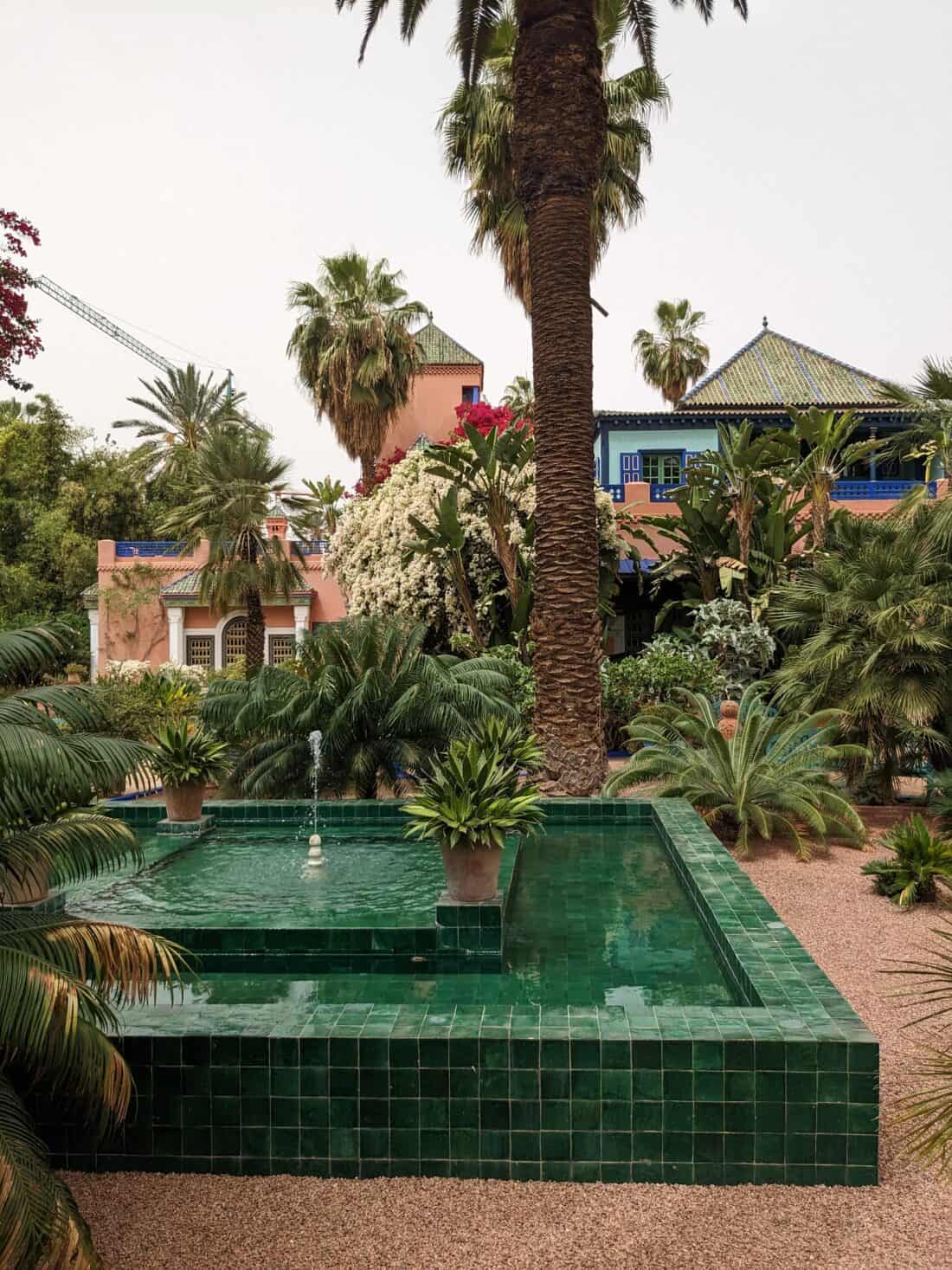
What interests me most about gardens like Majorelle is not whether they can be replicated, but what they reveal about intention. They show how gardens can operate as cultural statements—about authorship, place, identity, and the freedom to experiment within tradition.
Seen this way, Majorelle isn’t just a source of aesthetic inspiration. It’s an argument for gardens as living, evolving systems of meaning.
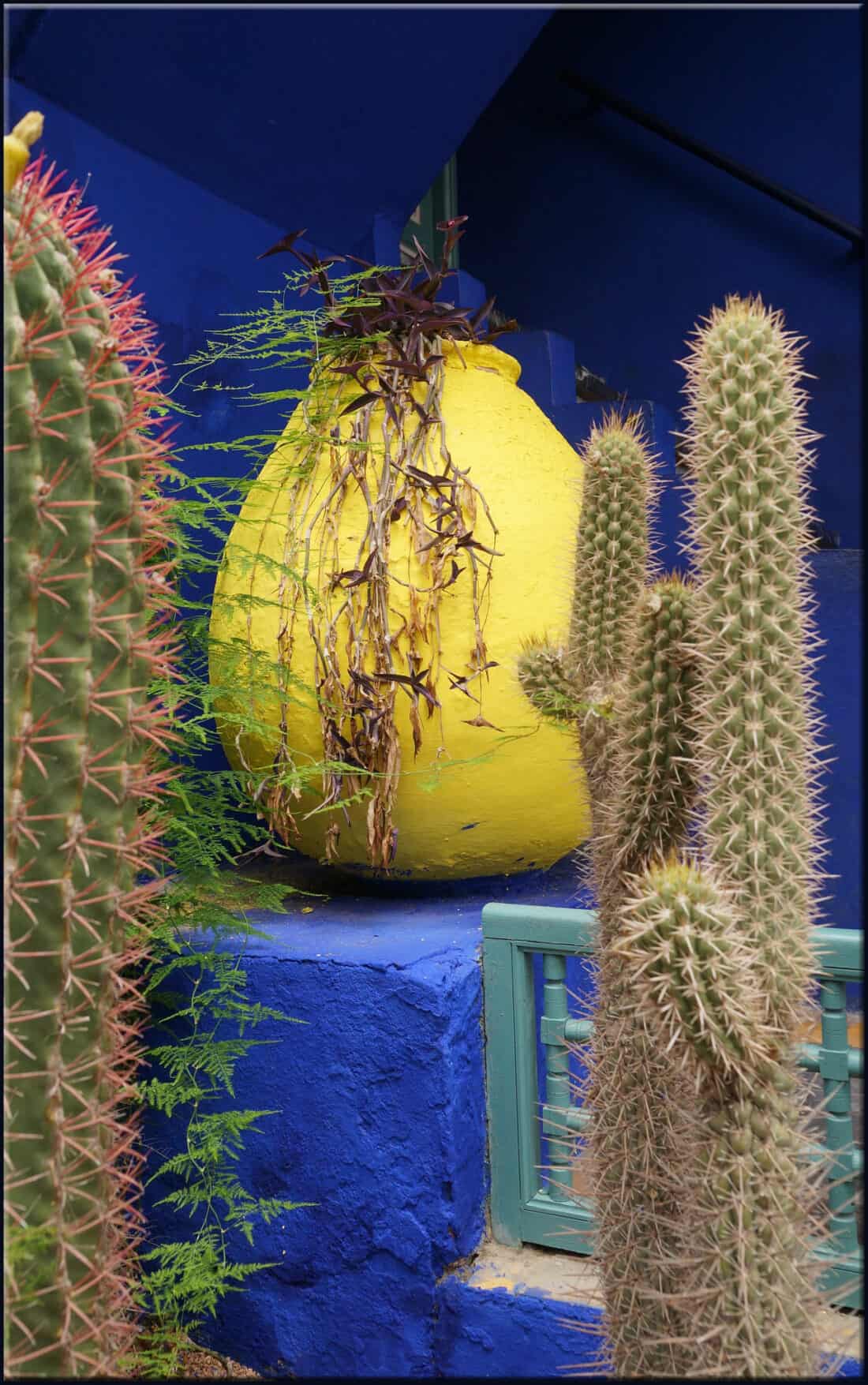
Yellow Egg pot and cactus
image by mhobl
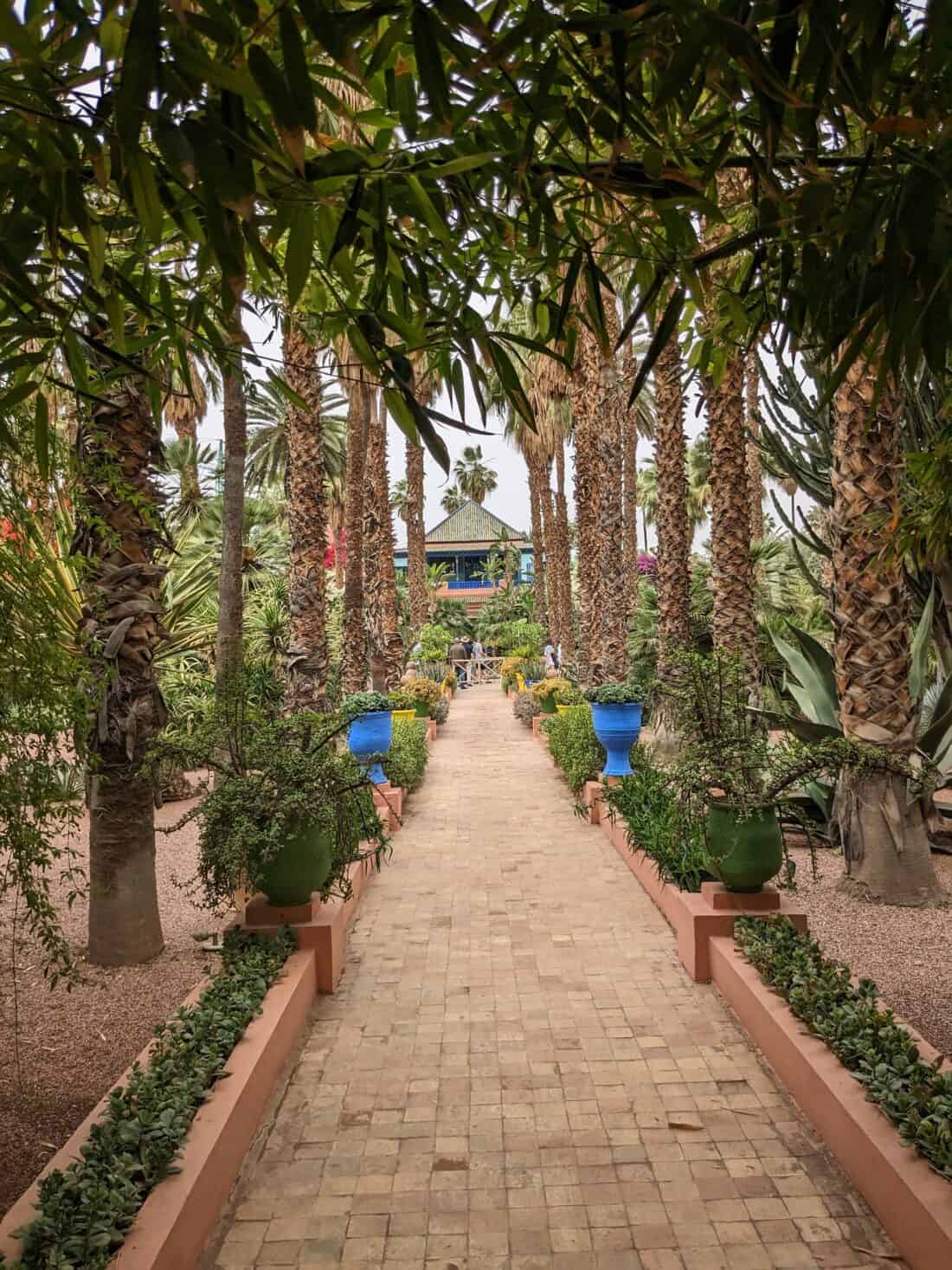
An Allee of palms and pots/
picture by Zaloa Etxaniz
I love the blue in these images. Just so happy a color.
I have been dreaming about Morocco lately and these images are fabulous!
beautiful color and a lovely place.